'%3E%3C/path%3E%3Cpath d='M76.4782 25.7185L71.982 9.04089H74.6936L78 22.8409L81.8045 9.04089H84.5853L88.2722 22.8409L91.5787 9.04089H94.2902L89.7248 25.6977H86.7781L83.1396 12.6379L79.3835 25.6977L76.4782 25.7185Z' fill='rgba(247, 43, 0)'%3E%3C/path%3E%3Cpath d='M96.6075 9.04089H102.439C103.739 9.04089 104.818 9.26224 105.676 9.69803C106.534 10.1338 107.17 10.7287 107.592 11.4827C108.014 12.2367 108.222 13.0875 108.222 14.0421C108.222 14.9483 108.021 15.7783 107.613 16.5254C107.212 17.2794 106.575 17.8812 105.725 18.3239C104.867 18.7666 103.774 18.9879 102.439 18.9879H99.1323V25.6977H96.6075V9.04089ZM99.1323 16.9128H102.321C103.511 16.9128 104.362 16.6568 104.881 16.138C105.399 15.6192 105.655 14.9206 105.655 14.0352C105.655 13.1152 105.399 12.3958 104.881 11.8839C104.362 11.372 103.511 11.1092 102.321 11.1092H99.1323V16.9128Z' fill='rgba(247, 43, 0)'%3E%3C/path%3E%3Cpath d='M124.138 25.9744C122.492 25.9744 121.067 25.6147 119.87 24.8953C118.674 24.1759 117.747 23.166 117.097 21.8725C116.446 20.5789 116.121 19.0848 116.121 17.3901C116.121 15.6746 116.446 14.1735 117.097 12.88C117.747 11.5864 118.674 10.5765 119.87 9.84329C121.067 9.11698 122.492 8.75036 124.138 8.75036C126.089 8.75036 127.68 9.22766 128.918 10.1753C130.156 11.1299 130.938 12.458 131.277 14.1735H128.469C128.247 13.2051 127.77 12.4373 127.044 11.8631C126.317 11.289 125.342 11.0054 124.118 11.0054C122.45 11.0054 121.136 11.5726 120.168 12.707C119.199 13.8415 118.715 15.3979 118.715 17.3831C118.715 19.3476 119.199 20.8971 120.168 22.0246C121.136 23.1521 122.45 23.7124 124.118 23.7124C125.342 23.7124 126.317 23.4427 127.044 22.9031C127.77 22.3636 128.247 21.6234 128.469 20.6896H131.277C130.945 22.3428 130.156 23.6294 128.918 24.5702C127.68 25.5109 126.089 25.9744 124.138 25.9744Z' fill='rgba(247, 43, 0)'%3E%3C/path%3E%3Cpath d='M133.961 25.6908V8.5636H136.486V25.6908H133.961Z' fill='rgba(247, 43, 0)'%3E%3C/path%3E%3Cpath d='M145.195 25.9744C144.067 25.9744 143.057 25.7185 142.158 25.1997C141.259 24.6809 140.553 23.9615 140.027 23.0346C139.502 22.1076 139.246 21.0216 139.246 19.7903C139.246 18.5591 139.509 17.4731 140.041 16.5392C140.574 15.6123 141.293 14.8929 142.192 14.3741C143.099 13.8622 144.102 13.5994 145.215 13.5994C146.343 13.5994 147.353 13.8553 148.252 14.3741C149.144 14.8929 149.864 15.6123 150.396 16.5392C150.929 17.4661 151.192 18.5522 151.192 19.7903C151.192 21.0285 150.929 22.1076 150.396 23.0346C149.864 23.9615 149.144 24.6809 148.245 25.1997C147.332 25.7185 146.315 25.9744 145.195 25.9744ZM145.195 23.8093C145.796 23.8093 146.357 23.6571 146.869 23.3597C147.387 23.0553 147.802 22.6126 148.121 22.0177C148.439 21.4228 148.598 20.6827 148.598 19.7903C148.598 18.898 148.446 18.1579 148.134 17.563C147.823 16.9681 147.415 16.5185 146.896 16.221C146.377 15.9167 145.824 15.7714 145.222 15.7714C144.62 15.7714 144.06 15.9236 143.548 16.221C143.029 16.5254 142.614 16.9681 142.296 17.563C141.978 18.1579 141.819 18.898 141.819 19.7903C141.819 20.6827 141.978 21.4228 142.296 22.0177C142.614 22.6126 143.023 23.0622 143.534 23.3597C144.032 23.664 144.586 23.8093 145.195 23.8093Z' fill='rgba(247, 43, 0)'%3E%3C/path%3E%3Cpath d='M158.275 25.9744C156.85 25.9744 155.723 25.5317 154.906 24.6394C154.09 23.747 153.682 22.4258 153.682 20.6688V13.8899H156.207V20.406C156.207 22.6887 157.141 23.83 159.015 23.83C159.949 23.83 160.717 23.498 161.326 22.834C161.927 22.1699 162.232 21.2153 162.232 19.9771V13.883H164.757V25.6908H162.522L162.336 23.6225C161.969 24.3488 161.436 24.9299 160.731 25.3449C160.011 25.7669 159.195 25.9744 158.275 25.9744Z' fill='rgba(247, 43, 0)'%3E%3C/path%3E%3Cpath d='M173.341 25.9744C172.2 25.9744 171.19 25.7046 170.318 25.1651C169.447 24.6255 168.762 23.8854 168.271 22.9515C167.779 22.0177 167.53 20.9525 167.53 19.7627C167.53 18.5729 167.779 17.5146 168.271 16.5876C168.762 15.6607 169.447 14.9275 170.325 14.4018C171.204 13.8692 172.213 13.6063 173.362 13.6063C174.296 13.6063 175.119 13.7861 175.824 14.1528C176.53 14.5194 177.083 15.0313 177.478 15.7022V8.5636H180.002V25.6908H177.74L177.478 23.8577C177.097 24.4111 176.571 24.9022 175.907 25.3311C175.243 25.76 174.385 25.9744 173.341 25.9744ZM173.791 23.7885C174.87 23.7885 175.755 23.415 176.44 22.6679C177.132 21.9209 177.478 20.9663 177.478 19.7903C177.478 18.6006 177.132 17.6391 176.44 16.8989C175.748 16.1588 174.863 15.7922 173.791 15.7922C172.712 15.7922 171.826 16.1588 171.127 16.8989C170.429 17.6391 170.083 18.6006 170.083 19.7903C170.083 20.5651 170.242 21.2568 170.56 21.8586C170.878 22.4604 171.314 22.9308 171.881 23.2767C172.435 23.6156 173.078 23.7885 173.791 23.7885Z' fill='rgba(247, 43, 0)'%3E%3C/path%3E%3C/svg%3E)
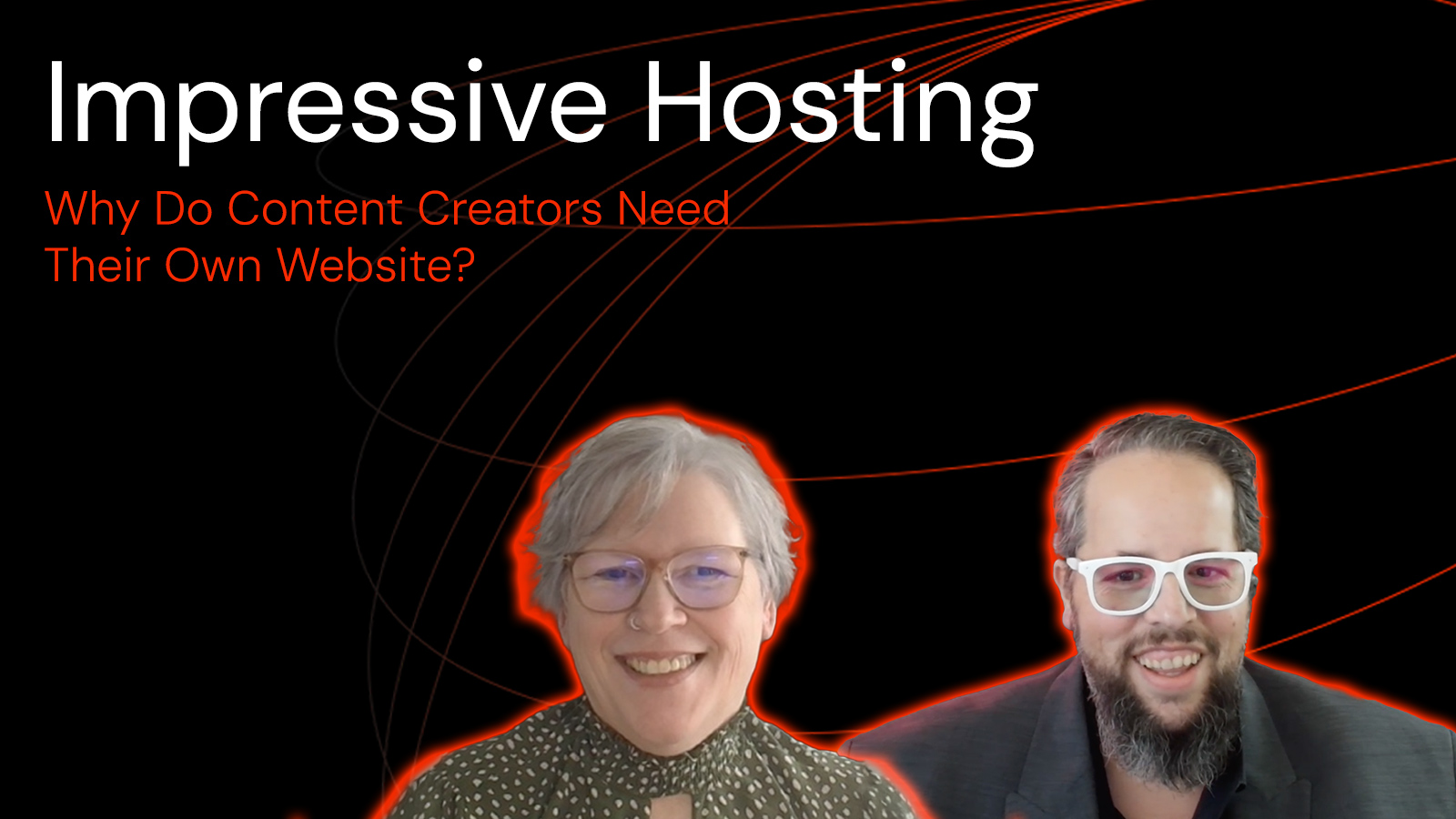
If Instagram banned you tomorrow, could you still reach your audience? Stacy L. Osten, Automattic’s Director of Affiliate and Influencer Marketing, says most influencers don’t even have a website. That’s a massive risk when your entire business depends on platforms you don’t control. At WordCamp Asia in Mumbai, Stacy and Jesse Friedman dig into why the open web is the only real insurance policy for creators.
Their conversation covers how WordPress can serve as a content hub. Stacy outlines a practical workflow where creators start with a video, turn it into a blog post, pull a summary for social media, and link everything back to their website. Stacy also shares numbers from her own experience running an online business for 12 years, including a 64% email open rate that became Stacy’s top revenue driver. The key insight is that owning your content and your subscriber list means no algorithm or executive decision can cut you off from the people who care about your work.
Jesse and Stacy also discuss how hosting companies of any size can get started with influencer and affiliate marketing. Stacy’s advice is to start small, be consistent, and give away useful content even when there’s no immediate return. The episode is a reminder that platforms come and go. Vine disappeared. TikTok nearly did. WordPress and the open web remain the foundation creators and hosting companies should be building on.
Links:
- Pressable
- Jetpack
- WooCommerce Marketplace
- Tumblr
- Day One
- Porkbun
- Mailpoet
- Linktree
- Redirection Plugin
- Jesse.blog
- WordCamp Asia
Transcript
Jesse: Hey, Stacy.
Stacy: Hey, Jesse.
Jesse: We’re at WordCamp Asia in Mumbai, India.
Stacy: Mm-hmm.
Jesse: How’s your WordCamp going?
Stacy: It’s been phenomenal so far.
Jesse: Yeah?
Stacy: Every time I come to a WordCamp, it reminds me why I fell in love with WordPress. The core of it is the people. Especially this one. The energy and the excitement everybody has just coming together, talking about WordPress, and meeting different people who love it as much as I do.
Jesse: That’s how I got my start too. I went to a local WordCamp, people helped me get things going, answered my questions. I started building websites and then felt very compelled to give back and do the same thing.
Stacy: Exactly. Yep.
Jesse: It’s a great return on investment kind of thing where everyone is helping each other get started, and then all of a sudden it snowballs and you have a passion for it.
Stacy: Yep.
Jesse: And there’s a vibe here in India. There’s something special about it.
Stacy: It is a special place.
Jesse: Is this your first time in Asia?
Stacy: Yes.
Jesse: Mine too. It’s been something else.
Stacy: Yeah.
Jesse: The crowds here have been amazing. So many people, all so eager to learn and to talk. But you deal with people all the time. You have employees at Automattic you’re working with, and colleagues outside of Automattic. Tell everybody what you’re working on.
Stacy: I’m the Director of Affiliate and Influencer Marketing for Automattic. That entails overseeing a very big portfolio of different products. The affiliate program covers wordpress.com, the Woo marketplace, Pressable, Jetpack, and a bunch of other things. The influencer program covers all of Automattic’s products, from Tumblr to Day One to wordpress.com. It’s about coordinating across multiple teams to figure out what everybody needs, from social media to PR, and bringing it all together.
Jesse: And you have influencers all around the globe.
Stacy: Everywhere.
Jesse: That’s amazing. You’re empowering people to make money by talking about WordPress, wordpress.com, and all these other products Automattic is working on. How do you tie that back into the WordPress community?
Stacy: There’s a symbiotic relationship we have with our community. We need our community, and in order to keep our community, we need to make sure they’re getting paid to talk about us. When I look at my affiliate program or my influencer program, I’m asking how can I use my marketing dollars to improve somebody’s life, keep them focused on WordPress, and pay them for talking about us? It gives me a wider reach and spreads the love of WordPress. It’s something I don’t want to go away, and I’m going to do everything in my power to create new audiences talking about WordPress.
Jesse: Yesterday you and I took a ride around Mumbai, and one of the things you said was that you need to make sure people can actually afford to talk about these products. My first thought was, well, it’s not that hard to launch a website, it’s not very costly to host it. But what you were actually talking about wasn’t the infrastructure or the hosting. It was the actual work that goes into creating content.
Stacy: Yeah.
Jesse: My whole life I’ve been working on WordPress and talking about it, but I haven’t necessarily generated income from that. You’re working with folks and helping them develop content.
Stacy: Yes.
Jesse: These people are making a living off of this content.
Stacy: Correct. And it’s an important thing for any company to realize that as a company, we have one voice. Our marketing team can put out a message. But when I can bring an entire coalition of a thousand or two thousand affiliates to talk about the same thing at the same time, that amplifies what we’re doing. One of our recent launches was plugins and themes on all paid plans. I can do all the talking I want, but I’m just one voice.
Jesse: Right.
Stacy: Having all of my affiliates come in and say, hey, by the way, did you know this is now available on your plan? That’s the value of coordinating that. And every conversion they get, they get a commission. It’s really important for me to give them content that’s going to resonate with their audience. That means understanding who their audience is so I can give them the information they need to communicate that message effectively.
Jesse: When you think about Automattic’s audience, you’re not just thinking about people who subscribe to the wordpress.com blog or the Automattic YouTube channel. You’re thinking through the lens of all your influencers. You have this wider audience. You don’t necessarily control the message, but you influence the influencers around what they can talk about.
Stacy: Correct. Because I have all the data. I’m sitting on a gold mine of data, and it does nothing for our affiliates if I just sit on it. But if I start seeing a trend, like hey, this article you’re doing about DIY website building is actually converting recipe website owners, maybe you should create an article specifically for that demographic.
Jesse: Yeah.
Stacy: I know who’s converting. When I can feed that information back to those affiliates, they can create niche content that is going to rank higher in organic search because it’s more targeted, and it’s catering to exactly who their customer is.
Jesse: So you’re not necessarily looking at people who are specifically selling WordPress hosting. You’re thinking about individuals who have a read on what people need to get online.
Stacy: Yes. Yep.
Jesse: These people are posting their content on social media and across different platforms. Does that become contradictory with owning a website?
Stacy: Explain that a little bit more.
Jesse: Like, you’re an Instagram influencer…
Stacy: Yep.
Jesse: But they’re telling people to launch a website.
Stacy: Oh yeah. That’s a phenomenal question. Because it’s the one thing people don’t understand. Or rather, they don’t know what they don’t know.
Jesse: Yeah.
Stacy: My biggest thing is never to build a business on somebody else’s platform. Facebook, Twitter, Instagram. These are companies with their own free will.
Jesse: Yep.
Stacy: You can go ahead and create your entire persona on one of those platforms. But what if they take away your ability to post, to use hashtags, or to advertise?
Jesse: Right.
Stacy: They’ve just taken away your entire line of communication with the people who love you.
Jesse: Yeah.
Stacy: If you have a million followers and Instagram tomorrow decides to ban you for some arbitrary reason, you’ve just lost all of them.
Jesse: Yeah.
Stacy: Creating a website changes that. If you start promoting, hey, here’s my website, go subscribe to my newsletter because I share things there that I don’t share on social media, you now own your audience. They are yours.
Jesse: Right.
Stacy: Nobody can take those away from you. There’s no Instagram that can come in and say, I’m taking all your newsletter subscribers. Those are yours. You get to control the message, the look, the feel, all of it. That’s what sustains a company. You have to diversify.
Jesse: Right.
Stacy: Because there are too many companies making too many decisions that impact what you’re going to do in the long run.
Jesse: Yeah, for sure. One of the interesting things is that most people are viewers, not creators. But I think there’s something about creating that everyone feels excited about, or at least hopes to do someday. The influencers you’re talking to are probably a bit more savvy about the open web and the need for a website. But do you get the sense that most people on Instagram and TikTok and these other platforms don’t understand the risk of building on them?
Stacy: I don’t think the majority do. When we talk to influencers, the first question I ask is what’s your website? The majority say they don’t have one. But it allows me to say, here’s why you need one.
Jesse: Yeah.
Stacy: There’s real value in being able to send somebody to your links on your custom domain, which is your name. That’s another layer of branding, instead of some generic page. But again, they don’t know what they don’t know.
Jesse: Right.
Stacy: So my job is to say, there’s this thing you can own. Here it is. Here’s how we can get you onto your own domain and your own website.
Jesse: Yeah. It’s interesting because we had Porkbun on the podcast, a registrar, and we talked about the value of domains. The fact that you have your own real estate, you own your portion of the internet. You get to brand it. And a lot of people don’t realize you can buy a domain and point it to anything you want.
Stacy: Absolutely.
Jesse: One of the things that comes up repeatedly on this podcast is this idea of owning your influence. Because people are building their entire business on a very fragile ecosystem and they don’t understand that these algorithms can pull the rug out from under you at any time.
Stacy: Yeah.
Jesse: For people listening at home, something you can probably relate to is that there was probably someone on TikTok you loved, and now you just don’t see them anymore. And you don’t necessarily have a mechanism to notice that they’re suddenly missing from your feed. Even as a follower, you don’t have control over the content you’re viewing because there’s an algorithm making decisions for you.
Stacy: Correct.
Jesse: That’s super frustrating for an influencer who is building a whole brand. The worst thing I’ve seen is shadow banning, where you’re watching your followers grow and grow, and then all of a sudden they start sinking with no information and nothing telling you what’s going on. You’re watching your followers decrease and you have no compass for what to do. How do you communicate with those customers? If the algorithm stops broadcasting your content, you have absolutely no…
Stacy: You have no voice.
Jesse: No way to reach them. The value of the open web and WordPress is that every subscriber, whether they’re on an RSS feed or email or whatever, you have a way to reach them independent of any third party.
Stacy: Exactly.
Jesse: And the only real variable at that point is the hosting company you choose.
Stacy: Yep.
Jesse: And so this is a common theme on this podcast. Make sure you’re choosing an ethical, strong host that offers managed WordPress hosting. One of the hosts you build an influencer network around is Pressable, and another is wordpress.com. They’re both powered by WP Cloud.
Stacy: Exactly. Yep.
Jesse: We manage this entire platform for those hosts, and in a sense we manage it for those end customers as well. So your influencers, when they’re selling these products to end customers, those customers get more of a platform feel because they don’t have to be hyper-familiar with performance issues, security, and all that. Does that make it easier to sell to that crowd?
Stacy: It does. People want to be safe on the internet. And if they’re building a business and they want their website to be their home base, they want to know it’s secure and it’s not going to go down. They need reliability. One of my goals is to create a world where people forget who they’re hosted with.
Jesse: Yeah.
Stacy: Because if you’re constantly getting downtime notifications or your customers can’t reach your website, that’s a constant reminder of your host.
Jesse: Right.
Stacy: I want to create a world where people just forget who their hosting company is because it’s just reliable. It just works, and you don’t have to worry about it. I ran a business online for 12 years, and I can’t tell you the panic I would feel when my website went down and I had no control over it.
Jesse: Right.
Stacy: You want a reliable company that’s going to be there for you.
Jesse: Yep. It’s interesting because when you’re building a website these days, there is a barrier to entry that requires some level of technical knowledge.
Stacy: Yeah. Yep.
Jesse: But when you look at something like Linktree or Instagram, you’re essentially just filling out a web form. There’s literally no barrier to entry. The problem I see with that is you have absolutely no need to familiarize yourself with how the algorithm works. It circles back to what we were talking about earlier. You have no idea what the risk is or how fragile things are.
Stacy: Yep.
Jesse: So with the open web, you own your content, you own your connection to your customers, you own your influence. WordPress can act as a hub. Are you thinking about how WordPress can operate that way, helping people distribute their content and work in tandem with social media while using WordPress as a foundation?
Stacy: Yeah. When I ran my business, it was post first to the website and then send out to everything else. We had a daily newsletter and independent contractors who created content for the store. They would post on WordPress, and from there it would RSS feed into our email and go out as a daily newsletter.
Jesse: Right.
Stacy: That daily newsletter became our number one return on investment. We ended up with a 64% open rate and a 34% click rate, and it became our number one driver of sales.
Jesse: Yep.
Stacy: Setting it up so you start with a website and push out from there, there’s this aspect of a forever legacy on your website. And if you start there, you end up spending more time thinking about what you’re going to post. For a lot of our creators, they create a video for YouTube. Then we suggest taking that transcript and telling it in a different way as a blog article on your website.
Jesse: Yep.
Stacy: Then you take the TLDR from that and post it on social media with a link back to your blog post. And from your blog post, you link to your YouTube. So you have one piece of content, a video, but it also lives on your website and in social media. It’s a diversification of content across different places. If one goes down, you still have all the other areas covered.
Jesse: Yeah. A lot of people, from my security background, would think they weren’t vulnerable to being hacked because they felt like, I’m a mom and pop, why would anyone bother? Or, I run a blog, who would want to hack my site? The reality is hackers are indiscriminately targeting everybody.
Stacy: They don’t care.
Jesse: But there’s a similar thing with social media platforms. They’re not in any way incentivized to protect any one influencer. Maybe their top 1% they care about. But everyone else, if the algorithm decides you’re no longer important, they’re not going to do anything to protect you. You could lose your audience overnight. With WordPress, you own that. The thing I keep coming back to is how do we make sure people own their influence? You touched on email.
Stacy: Yep.
Jesse: Email is a fantastic tool, and Automattic has Jetpack, Mailpoet, things like that. But there are a million options out there.
Stacy: Yeah.
Jesse: The main thing is just getting people to subscribe. One thing people could start doing is pointing their social media audience back to their website.
Stacy: Absolutely.
Jesse: It’s funny because in almost every piece of social media content there’s always a “don’t forget to like and subscribe.” I hate doing it on this podcast but I do it because it matters. But I never hear people say, go to my website and do this. Part of that is because social media platforms make it harder to link out. On Instagram you can put a URL in the comments but it’s not clickable.
Stacy: Right.
Jesse: One of the things I started doing on my personal blog, Jesse.blog, is creating a redirect for every article I write. The actual slug might be 60 characters long, but I use the Redirection plugin and create something like jesse.blog/11. In future videos I’ll have that short URL on screen, and it ties back to exactly what you were describing. Flagship content on the website, record yourself talking about it, distribute it out, and then that short URL makes it easy for people to get back to WordPress. Then hopefully they subscribe there, and if social media ever deems my content unimportant, or like we saw with TikTok, the platform itself becomes unavailable…
Stacy: Right. And this is the thing that makes me laugh when people say, well, it’s not going away.
Jesse: Yeah.
Stacy: What happened to Twitter Vine? What happened to Vine? It went away. People built their business on Vine.
Jesse: Yeah.
Stacy: They built an entire personality on it. Then the company decided this isn’t making us the money it needs to make, and they shut it down.
Jesse: Right.
Stacy: Those people put all their time and energy in and it’s just gone. That’s the scary part. You don’t have any control. Whereas with a website, that is your control.
Jesse: That’s a great point. And if you build your social media alongside it, you figure out how to get people back to your website. You offer them things exclusive to your website. Sign up for my newsletter and get this. There’s a whole strategy around pushing them back to your website so you can own that relationship, because you never know what decisions the executives at these social media companies are going to make next.
Stacy: Yeah. And it could just be you.
Jesse: Right. For the people at home who are listening, a lot of them work for hosting companies, run agencies, things like that. What advice would you have in terms of trying to shift the paradigm, get people to their hosting company, and get started with influencer marketing and building a network to promote their brand? If we think about the top 10% of hosting companies, they’re probably already doing this. But there are hundreds, if not thousands, of smaller hosting companies that don’t have a marketing team or a larger budget. How would they get started?
Stacy: Start small. And be realistic about it. It’s time consuming. An influencer doesn’t immediately go viral. That’s like winning the lottery. Be consistent and provide people with solid content. There’s sometimes this idea that if I give something away for free, I’m devaluing myself. But I’ve found it’s the exact opposite.
Jesse: Yeah.
Stacy: When you offer something for free and somebody takes advantage of it, it’s usually because they can’t afford you yet. And that word yet is important.
Jesse: Yeah.
Stacy: There will come a time when they can. Because you’ve been top of mind, helpful, and provided free things, you’re going to be the first person they think of. If they end up needing a web developer, they’re going to think of you because you gave them a free WordPress template. They didn’t need you then. But it’s about putting the customer first, understanding their needs, and giving them the knowledge to do what they want to do, even when they’re not in a position to use you as their web host or web designer yet.
Jesse: Yeah. That’s great. Well, I think we’re going to take a break and then come back. Thank you so much for this. It was a great conversation. I can’t wait to keep it going.
Stacy: Awesome.
Subscribe to Impressive Hosting:


Leave a Reply