'%3E%3C/path%3E%3Cpath d='M76.4782 25.7185L71.982 9.04089H74.6936L78 22.8409L81.8045 9.04089H84.5853L88.2722 22.8409L91.5787 9.04089H94.2902L89.7248 25.6977H86.7781L83.1396 12.6379L79.3835 25.6977L76.4782 25.7185Z' fill='rgba(247, 43, 0)'%3E%3C/path%3E%3Cpath d='M96.6075 9.04089H102.439C103.739 9.04089 104.818 9.26224 105.676 9.69803C106.534 10.1338 107.17 10.7287 107.592 11.4827C108.014 12.2367 108.222 13.0875 108.222 14.0421C108.222 14.9483 108.021 15.7783 107.613 16.5254C107.212 17.2794 106.575 17.8812 105.725 18.3239C104.867 18.7666 103.774 18.9879 102.439 18.9879H99.1323V25.6977H96.6075V9.04089ZM99.1323 16.9128H102.321C103.511 16.9128 104.362 16.6568 104.881 16.138C105.399 15.6192 105.655 14.9206 105.655 14.0352C105.655 13.1152 105.399 12.3958 104.881 11.8839C104.362 11.372 103.511 11.1092 102.321 11.1092H99.1323V16.9128Z' fill='rgba(247, 43, 0)'%3E%3C/path%3E%3Cpath d='M124.138 25.9744C122.492 25.9744 121.067 25.6147 119.87 24.8953C118.674 24.1759 117.747 23.166 117.097 21.8725C116.446 20.5789 116.121 19.0848 116.121 17.3901C116.121 15.6746 116.446 14.1735 117.097 12.88C117.747 11.5864 118.674 10.5765 119.87 9.84329C121.067 9.11698 122.492 8.75036 124.138 8.75036C126.089 8.75036 127.68 9.22766 128.918 10.1753C130.156 11.1299 130.938 12.458 131.277 14.1735H128.469C128.247 13.2051 127.77 12.4373 127.044 11.8631C126.317 11.289 125.342 11.0054 124.118 11.0054C122.45 11.0054 121.136 11.5726 120.168 12.707C119.199 13.8415 118.715 15.3979 118.715 17.3831C118.715 19.3476 119.199 20.8971 120.168 22.0246C121.136 23.1521 122.45 23.7124 124.118 23.7124C125.342 23.7124 126.317 23.4427 127.044 22.9031C127.77 22.3636 128.247 21.6234 128.469 20.6896H131.277C130.945 22.3428 130.156 23.6294 128.918 24.5702C127.68 25.5109 126.089 25.9744 124.138 25.9744Z' fill='rgba(247, 43, 0)'%3E%3C/path%3E%3Cpath d='M133.961 25.6908V8.5636H136.486V25.6908H133.961Z' fill='rgba(247, 43, 0)'%3E%3C/path%3E%3Cpath d='M145.195 25.9744C144.067 25.9744 143.057 25.7185 142.158 25.1997C141.259 24.6809 140.553 23.9615 140.027 23.0346C139.502 22.1076 139.246 21.0216 139.246 19.7903C139.246 18.5591 139.509 17.4731 140.041 16.5392C140.574 15.6123 141.293 14.8929 142.192 14.3741C143.099 13.8622 144.102 13.5994 145.215 13.5994C146.343 13.5994 147.353 13.8553 148.252 14.3741C149.144 14.8929 149.864 15.6123 150.396 16.5392C150.929 17.4661 151.192 18.5522 151.192 19.7903C151.192 21.0285 150.929 22.1076 150.396 23.0346C149.864 23.9615 149.144 24.6809 148.245 25.1997C147.332 25.7185 146.315 25.9744 145.195 25.9744ZM145.195 23.8093C145.796 23.8093 146.357 23.6571 146.869 23.3597C147.387 23.0553 147.802 22.6126 148.121 22.0177C148.439 21.4228 148.598 20.6827 148.598 19.7903C148.598 18.898 148.446 18.1579 148.134 17.563C147.823 16.9681 147.415 16.5185 146.896 16.221C146.377 15.9167 145.824 15.7714 145.222 15.7714C144.62 15.7714 144.06 15.9236 143.548 16.221C143.029 16.5254 142.614 16.9681 142.296 17.563C141.978 18.1579 141.819 18.898 141.819 19.7903C141.819 20.6827 141.978 21.4228 142.296 22.0177C142.614 22.6126 143.023 23.0622 143.534 23.3597C144.032 23.664 144.586 23.8093 145.195 23.8093Z' fill='rgba(247, 43, 0)'%3E%3C/path%3E%3Cpath d='M158.275 25.9744C156.85 25.9744 155.723 25.5317 154.906 24.6394C154.09 23.747 153.682 22.4258 153.682 20.6688V13.8899H156.207V20.406C156.207 22.6887 157.141 23.83 159.015 23.83C159.949 23.83 160.717 23.498 161.326 22.834C161.927 22.1699 162.232 21.2153 162.232 19.9771V13.883H164.757V25.6908H162.522L162.336 23.6225C161.969 24.3488 161.436 24.9299 160.731 25.3449C160.011 25.7669 159.195 25.9744 158.275 25.9744Z' fill='rgba(247, 43, 0)'%3E%3C/path%3E%3Cpath d='M173.341 25.9744C172.2 25.9744 171.19 25.7046 170.318 25.1651C169.447 24.6255 168.762 23.8854 168.271 22.9515C167.779 22.0177 167.53 20.9525 167.53 19.7627C167.53 18.5729 167.779 17.5146 168.271 16.5876C168.762 15.6607 169.447 14.9275 170.325 14.4018C171.204 13.8692 172.213 13.6063 173.362 13.6063C174.296 13.6063 175.119 13.7861 175.824 14.1528C176.53 14.5194 177.083 15.0313 177.478 15.7022V8.5636H180.002V25.6908H177.74L177.478 23.8577C177.097 24.4111 176.571 24.9022 175.907 25.3311C175.243 25.76 174.385 25.9744 173.341 25.9744ZM173.791 23.7885C174.87 23.7885 175.755 23.415 176.44 22.6679C177.132 21.9209 177.478 20.9663 177.478 19.7903C177.478 18.6006 177.132 17.6391 176.44 16.8989C175.748 16.1588 174.863 15.7922 173.791 15.7922C172.712 15.7922 171.826 16.1588 171.127 16.8989C170.429 17.6391 170.083 18.6006 170.083 19.7903C170.083 20.5651 170.242 21.2568 170.56 21.8586C170.878 22.4604 171.314 22.9308 171.881 23.2767C172.435 23.6156 173.078 23.7885 173.791 23.7885Z' fill='rgba(247, 43, 0)'%3E%3C/path%3E%3C/svg%3E)
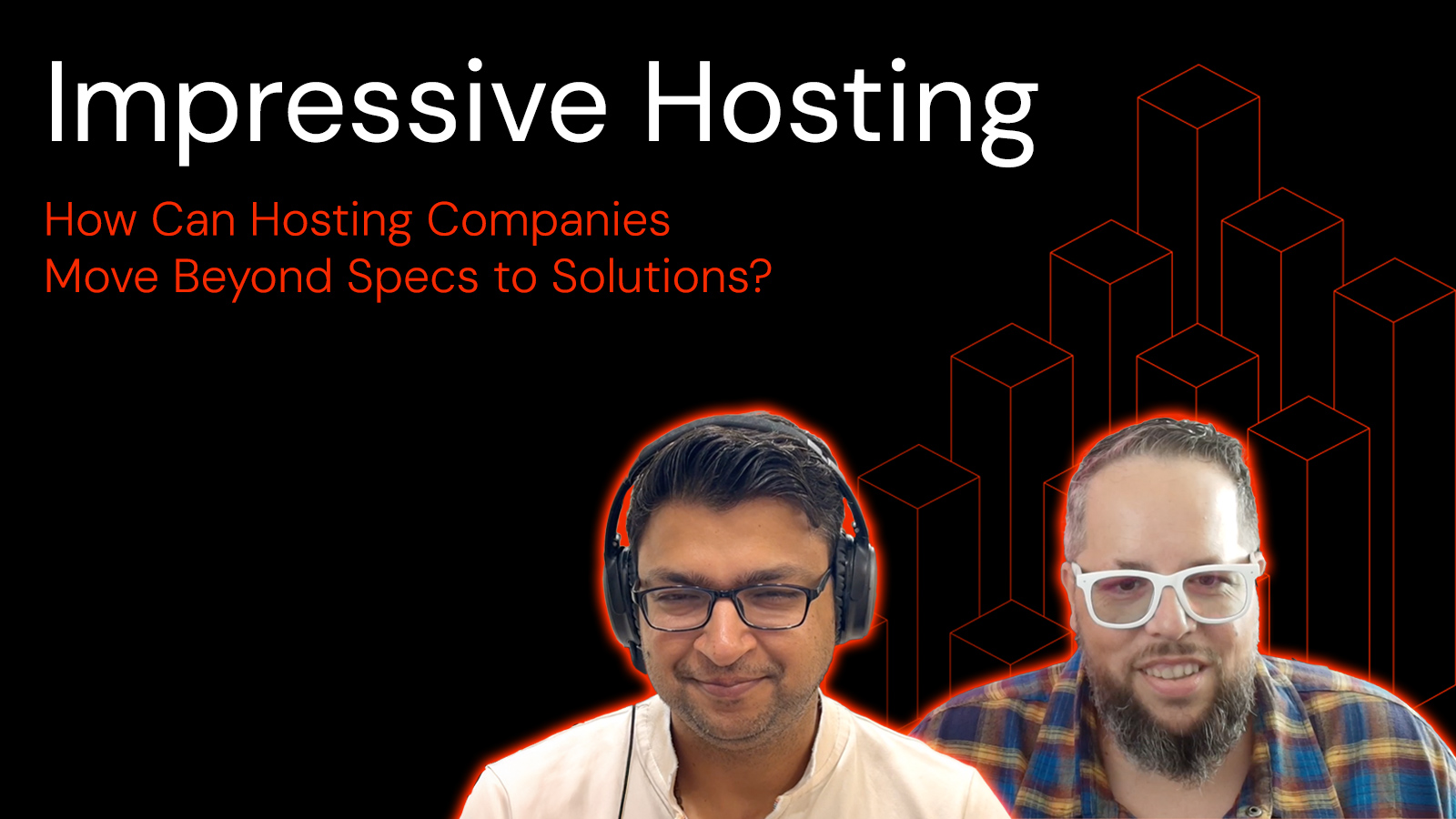
In this episode, Jesse and Vikas Singhal tackle a fundamental question facing the WordPress hosting industry: how do we compete with platforms like Shopify and Squarespace? The answer lies in embracing niche solutions and AI-powered automation that makes WordPress as user-friendly as closed platforms.
Singhal shares insights from working with thousands of agencies and hosting companies, explaining why the traditional approach of selling universal hosting tools is becoming obsolete. They discuss how hosting companies can create industry-specific solutions for lawyers, hairdressers, or bakeries, capturing customers who aren’t even searching for ‘hosting.’
The conversation also explores the technical possibilities of conversational WordPress management, where users can update content, configure plugins, and manage their sites through natural language interfaces. This forward-looking discussion offers hosting professionals a roadmap for staying competitive in an evolving market.
Links:
Transcript
Jesse Friedman: Welcome to Impressive Hosting, where we uncover the core tenets of great WordPress hosting. I’m your host, Jesse Friedman. Before we dive in, remember to check out impressive host. It’s where you can comment on episodes, ask follow-up questions, and submit questions for upcoming guests. You’ll also find all our links to follow, like, and subscribe wherever you listen. With me today is Vikas from InstaWP. He’s the CEO. He is a friend. And someone that we’ve been working with from the Automattic perspective for quite a while now. Very impressed with the things that he’s doing at InstaWP and we just had a great conversation in the first episode talking about a variety of things from ephemeral websites, demos, the ability to give people the opportunity to test WordPress before they pay for it. Reducing the hurdles for hosting companies to acquire customers, which by the way, I think is super important. One thing that we didn’t explicitly say, we kind of touched on it, but I think it’s really valuable to a hosting company. You know, they’re not stuck in this theoretical, we’re making promises to you kind of situation when they’re acquiring a customer through a demo, right? Because until they get the chance to try it out, the hosting company is basically saying, we have this, we have this tool. We will be your successful platform. We will help you grow. But the customer doesn’t actually know if any of that’s true until they actually get in there and start playing with it. So the demo kind of eliminates that question for them, which is great.
Vikas Singhal: Just one more thing I want to add on this topic. The demos and the experience is solved for a bunch of use cases and hosting companies are no longer a technical partner for a business. They’re actually enablement for going live soon and properly. There is an expectation in the industry, which already is that the site cannot go down. The uptime is now taken for granted. So you get that with things like Bluehost Cloud or a good hosting infrastructure. But then also, users, they don’t care. They automatically assume that the site will not be hacked. The site will be faster, the site will have backups, etc. So these are properties of a managed WordPress hosting, which is a mouthful when you say it, but the user automatically assumes that my hosting has all of these. And with also the competition, which we are facing with the non-WordPress or the wild guidance of the internet, right? They bring these things along with them, although they charge heavily, right? But with WordPress, you can also offer that with a fraction of the cost at a better experience. So I think gone are the days where you can just say, this is five GB disk, and that’s it. Those are already taken for granted.
Jesse Friedman: You know, I think you’re absolutely right. I think if you look at the way in which the industry is shifting, while WordPress still has a vast majority of the market. When you look at Squarespace or Shopify, they’re not selling hosting, right? It’s very hard to actually find and do the research of understanding what it is that the technology is that they’re built on. You don’t see it in the landing pages, you don’t see it in the pricing grids. You just see that they’re going to be offering you this all-inclusive e-commerce package and it’s gonna be everything you need to be successful. And also, you know, Shopify does a really good job of building out landing pages to teach you explicitly how to build X, Y, Z business on their platform. If you ever tried it, this is something for the WordPress ecosystem, and I think it’s something that all hosting companies can benefit from. Go and type in Google, Shopify, build a Shopify website for bakeries, or build a Shopify website for my photography business. They have a how-to. Deep, well-written article for every industry out there. And it shows you exactly all the step-by-step pieces that you need for it. And that’s something that I think hosting companies can really benefit from. Even if they’re all just funneling them down into the same experience at the end, capturing niche experience is super important. And that’s something that we touched on in the earlier episode. You had mentioned that some of the tools that you provide can actually help enable a hosting company to build out niche solutions. Tell us a little bit about that. Because I think as we start to transition away from selling universal hosting tools and into more of a platform-based solution, we’re going to see that people are going to want to find their lawyer hosting company or their ice cream shop hosting company. So what do you think about that? How do you think that the hosting company should be approaching that?
Vikas Singhal: While I talk about that, this is also applicable to agencies who are planning to automate their agency business. As I said earlier, our APIs are there, regardless of who is selling, is it agency or is it a hosting company? So the great idea comes from that. Now the niche hosting is, as you said, for example, lawyers. There are so many agencies, which I know they just target a single niche of users in their target area because they know it really well they can come to 5,000, 2,000 or a thousand clients. Just through that niche, and that is enough for a small agency. Same goes for hosting companies. If a Netherlands-based hosting company targets hairdressers in their area and say there are 5,000 or 10,000 hairdressers, they can easily acquire them as opposed to acquiring 5,000 customers through regular PPC ads for web hosting or WordPress hosting because these people are actually not searching for web hosting. They actually don’t know the word hosting. So that’s the irony, right? They will search in ChatGPT or Google or whatever, right? How to build a website for my hairdressing business, right? There they should, the AI should recommend that you can go to X, Y, Z website and enter your business name and what you do, and click a button. And your website will be built. So that is the experience I think is the gap right now. And a lot of people are working towards that and hosting companies. The easiest way for them, even if they don’t use InstaWP or they don’t use any of our products, is for them to build a template library. And they can start from very small from there and using Gutenberg or any other page builder, Gutenberg. The beauty of Gutenberg is that it is free, right? It comes with the core and you can build beautiful templates and you can hire someone or you can use the pattern library, etc., to build these beautiful experiences. And just have those in your landing page that changes the way people think about how to build a website and then start from there. I think that’s a great starting point.
Jesse Friedman: I think you’re absolutely right. My wife actually just finished writing her first book and in her efforts to promote it and everything else, she’s been going to these conferences and talking to people in the industry. And what I’ve actually learned from her is that a lot of these people out there are taking advantage of specific software to help them achieve their goals. So in the old days, you know, you might just use a word processor or Microsoft Word, Google Docs, something like that. But now people are getting more involved in using these novel writing tools that help you kind of step through all these processes. They give you all the things to help you manage characters, things like that. And because of that, we’re starting to see that the software companies that are making these tools available to fiction writers, to authors is that they’re also saying like, Hey, we can build a website for you. I actually just saw this, I think it was Novel or ChapterLee or something like this. There was a tool out there that not only helped you to write your book, but then took that book. Instantaneously built a website around that book for you to ship it and sell it. Now, the tools that they actually ended up providing, in terms of a website, were very rudimentary, but I think it solves a problem for that author in that they feel like they’re getting the exact thing they need to be successful. Whereas when we sell things universally, we end up giving people a whole library suite of features and tool sets and things like that because we need to cover all these bases. And then what we end up doing is we dilute the problem by giving them things that they don’t necessarily need or use. So in the same e-commerce platform that you’re using to sell retail, or to distribute a book. You’re also giving them an LMS or you’re giving them the ability to do digital downloads or whatever it might be. And that might be helpful in some cases, but, you know, it’s this universal tool thing. And so I think when we talk about niche solutions and agencies out there, hosting companies out there solving for that problem, I think one thing that it does really well, is it solves the problem that these customers don’t have faith. That they’re going to be successful, and it’s something that we see in SaaS. It’s something that we see in support. It’s this idea that I don’t want to converse with your AI bot because I don’t have faith that it’s gonna answer my question. I don’t want to try out your software and learn all this new technology because I don’t have faith that the investment I’m going to make is going to reap the rewards later on. So I think what you’re doing and the work that we’re seeing that hosting companies can take advantage of around these things is that we’re eliminating that blank canvas problem that we’ve known that’s existed for a very long time. And at the same time, we’re also helping to close the gap between what a customer thinks is possible and what is actually possible. And you know, it’s a common theme that we see on this all the time is that, I think in the WordPress ecosystem, the way in which the community has interpreted things for a long time is that we had this misconception that because we love WordPress and because we love operating around WordPress and going to WordCamps and doing all these fun things and having a great community behind us. That that means the guy who’s running the local barbershop or the woman who’s running the local accounting firm wants to become a web designer too. You know, and that’s not necessarily the case. And so, you know, their time is very precious to them. They want to focus on what makes them money and makes them successful. Becoming a web designer is not it, that’s not what they’re doing. That’s not what their livelihood is focused around.
Vikas Singhal: This is the ‘saasification’ of WordPress what we are seeing right now. The technology should abstract itself, should basically delete itself. And the bridge between the user and the output should be minimal. I think Noel said it really well. Time to launch should reduce to hours or minutes instead of days. Agencies, sometimes when I talk to them, we have thousands of agencies using our product and they feel a little bit left behind. What will be good for them? Where do we play in this? What role do we play? So I tell them two things. First is you reduce the time for people to build websites through the solutions which you can build. Instead, you can build a website as a service and you can give a link to people and they can build themselves when they need further customization. And then you come in. So you are actually acquiring more customers through AI instead of fewer customers. So it’s the change of perspective how you used to think. Previously you had a form on your agency website. You see the similarities between how hosting companies had pricing plans and the agency had a contact form and both of these need to delete themselves. And instead of that, it should say, build a website. Make it easy for customers to onboard so that paywall or that hurdle needs to just go away.
Jesse Friedman: You know, I love that because one of the things that we talk about in terms of the core thesis of the show is that hosting companies should really be aligning themselves with the success of their customer. And I can tell you as someone who’s worked in this industry a really long time, that you have certain hosting companies, usually the ones who are smaller, trying to carve out their opportunity to acquire customers are the ones that are spending most of the time innovating and finding new opportunities to really hone in a great experience for a customer. But as you get to be a larger and larger hosting company, there are exceptions out there. I think Bluehost, for example, does an amazing job of really servicing customers. But you know, it’s rare at that size when they have these huge volumes of sites and they’re acquiring tons of customers that you see that they’re not just focused on acquisition. And so, you know, what’s interesting there is that they’ll pay extraordinary fees for advertising. They’ll be on social media. They’re doing all these things around the sucking in of that customer base because it’s beneficial to them and it’s sticky. You buy, you tend to sell large, long-term plans to save money. Customers come on, they don’t want to move, they don’t want to migrate their site. So even if they got a little bit of stuff going, and so what ends up happening is that they bail and they give up on that WordPress experience. Because the most important thing to that hosting company was the acquisition of that customer, not the alignment of the success with that customer. But when you look at a hosting company that is more focused on saying we’re focused on long-term growth of these customers, we align ourselves with the success of them, then all of a sudden the dynamic changes, and it’s not about acquiring the customer, it’s about making sure that they’re actually going live. And you mentioned before a metric that I think most hosting companies use: time-to-live or time-to-launch. And just so people at home know exactly what we’re talking about, this is the time from when someone finishes registration, usually pulling out a credit card, although maybe not. Maybe you’re changing the dynamic of the time-to-live metric with demos. But usually from the point when they type in their credit card to the time when they pull down that coming soon page and say their site is live, that is the time-to-live metric. And you know, years ago it was weeks. It was like a medium area that you were in. Now it’s, I think, days. I think the idea though that we’re trying to get to here is that you could be doing it in hours, maybe even minutes. And when you personalize that experience for that end customer by providing them tools that are specific to their industry, you’re able to close that gap and provide a lot more for them. And when you get into AI, being able to write content, do layouts, you can get into a conversational situation where, you know, we’ve seen this with agencies for years where they have conversations with customers to suss out what it is that they want. They ask great questions along things like that, what they like from a website, what their goals are. Tell me examples of websites you don’t like. These are the types of things that a non-AI based automated system could never do. But now with AI and the ability to lean on these language models, you could actually have these conversations and turn that into, alright, now it’s time to build your website. And whether that’s going to ChatGPT and it kind of walking you through step-by-step, or it’s fully integrated into the backend and doing the work for you. I think, I think you’re right. I think we’re going to get to a place where, and I really liked what you said there, consumerification of WordPress. Which is interesting because the way in which we’ve kind of taken WP Cloud to market is this idea that it’s a WPaaS, WordPress-as-a-service platform that we’re trying to make accessible to everyone out there who wants to launch a hosting company to kind of lower those barriers of entry. But now we’re also seeing this end customer consumerification that you’re referring to, which is, I think it’s all really interesting and it’s a really smart thing to be ahead of in terms of the way in which the industry is moving.
Vikas Singhal: Yeah. Hundred percent. I totally agree on that.
Jesse Friedman: Now, in the last episode, you mentioned something about how the hosting companies are afraid to kind of get in and touch the WP admin, maybe make alterations, customize it. What do you think that hesitation comes from?
Vikas Singhal: I think they have not done it yet. They want to, they want to see examples of that. Also hosting companies, sounds like a lame reason, they do not have a lot of plugin developers inside their company is what I’ve seen. They’re not very sure about the journey inside the admin panel. So all of these put together is the reason why they have not entered into that unknown territory, but they should is what I see. They should have a landing page at least where they can guide the user properly. They can also have one-click demo importers, which sounds like very traditional legacy stuff, but still helps, right? And they can also build their own Gutenberg pattern library for them to get started. So those are like very easy, low-hanging fruit for a host. They don’t actually need to buy any service from us or from someone else, but if they do, they can actually have a, believe it or not, having a non-vanilla website with a plugin pre-installed or a theme pre-installed is very hard for hosts. Which was really surprising for me. With WP Cloud and with what we offer, I think you can start from a non-vanilla experience, which is a technical problem. At the same time it’s a non-technical problem, but technically hosts are like, how do I do that? And then we tell them you can start from a snapshot of a theme or a template, and that itself blows their mind. So you can see that the gap is too huge to be filled and it can be filled very easily.
Jesse Friedman: Yeah. So, you know, it’s interesting because what we talk about in terms of when we’re talking about WP Cloud is that we mentioned something called a golden image. The idea that you create this perfectly crafted, bespoke website, and it has all the configurations you need, the plugins that you want, the themes, it has the settings set the way that you want. And at any moment you can clone that. Now a clone on WP Cloud happens in like five seconds, instantaneous, basically. And so what we’re able to do is be able to provide the tools to agencies or hosting companies to be able to set multiples of these and then just spin them up every single time that they launch something. So going back to what you were talking about with niche solutions, you get to a place where you’re able to solve for those problems by saying, here’s my lawyer website golden image. Here’s my bakery golden image. And it has everything it needs for that customer to be successful, and you instantaneously just replicate it and it’s available to them now.
Vikas Singhal: Ready for use.
Jesse Friedman: These tools exist today and they’re not actually taking advantage of them. And I think, you know, one thing that you mentioned there that I think is really important for people to listen to at home is that I think a lot of times hosting companies say to themselves, like, how do I make sure that the investment I make back into the WordPress community is something that I can actually get value out of? We talk about Five for the Future, and having a development team in-house that are sponsored by the hosting company, it’s not always the easiest thing, but what you just mentioned is that hosting companies don’t always have this deep, intimate knowledge of WordPress that they probably should if they’re selling it. And if you had a team who were dedicated to sponsoring, you know, were sponsored to WordPress and providing dedicated support back to the community. I think a lot of times people think like, oh, well those individuals are going to be focused on WordPress core. They’re not going to be business oriented. That’s so false. You can take those individuals into meetings every single day and have them inform your business teams or your product teams and help them to understand the advantages of WordPress and do it in a more intimate fashion with that deep knowledge. I think those individuals don’t necessarily have to be thinking about it from the perspective of like, I’m supporting WordPress core so I can’t support my business. That’s not the case at all. They can be hugely helpful in traversing the challenges that hosting companies are facing inside of the WP admin.
Vikas Singhal: Yeah.
Jesse Friedman: I think that’s really interesting. You know, I do know of some hosting companies. I work for Automattic, we have bespoke WP admin. I know that Bluehost Cloud has a plugin that is very focused on the next steps within your WP admin. But I think at the end of the day, you’re also right because hosting companies have helped for a long time that customers want vanilla WordPress. They’re very opinionated about what it is that they want, and so they don’t touch the WP admin as much. But I think it’s a red herring. I think what we’ve gotten to is a place where hosting companies are so comfortable stuffing WordPress with plugins that make them money. Plugins that have affiliate fees tied to it, plugins that further a different cause that aren’t necessarily tied to the success of that customer. So when we are able to fix that and solve for it differently, where you’re changing the admin to actually benefit the experience of that customer, I think that then you can actually go down that road in a way that’s a little bit safer. And I think hosting companies should definitely try a little bit more to make a more bespoke WP admin experience. I’m a hundred percent behind you on that one. You know, it’s interesting because, and this is the last thing I’ll say on this subject, when I talk to hosting companies about WP Cloud, one of the things they say to me is that, well, we’re the hosting company. We have the infrastructure. That’s what we differentiate ourselves on. And I try to remind them of the same conversation we just had, which is that people aren’t buying hosting. They’re not looking at three different hosting companies and trying to decide between the RAM that they have on the box or the CPUs that they’re using, things like that. That’s not how they’re comparing hosting companies. They’re comparing it based on the product line. And it’s funny because that seems strange to them, but at the same time, what are you selling? You’re selling WordPress hosting. That’s the same software that everybody else is using. So you’ve had to already figure out a way to differentiate yourself on top of another layer that you’re already offering, that everybody else is already offering. So once you start getting into customizing the WP admin in a way to help people be successful, I think not only are you differentiating yourself in the market, but you’re also doing something to make that customer a little bit stickier. Because when they go to migrate to another customer, another hosting company, they will begin to recognize that the tools that they had. Not WordPress vanilla. It was actually the tool set that the hosting company had delivered to them.
Vikas Singhal: Right. Yeah. And then you become sticky, right? At that point.
Jesse Friedman: Mm-hmm. Yeah.
Vikas Singhal: So there is so much hosting company can do, and which I think they should be doing.
Jesse Friedman: Yeah.
Vikas Singhal: Too much to explore. I’m also, sometime I think that I should launch an end user hosting company just as a template for the others to follow, is how. And you don’t need to do anything else. You just need to copy what Squarespace or Shopify is doing when it creates experiences for your users to build a website and then go live within, say, 24 hours or something, set a timeline and let them explore themselves.
Jesse Friedman: I think that’s really great. I think that’s a different way to look at what Jamie Marlin’s doing with these speed builds. Instead of looking at an individual building a website from scratch, it’s how can we get a challenge going where we put it to the hosting companies to see what they can do to get their time to live metrics down as low as possible. That would be a really cool kind of WordPress Olympics type thing. Who’s got the lowest world record for getting a thousand sites loaded or launched or something like that. That would be pretty cool.
Vikas Singhal: Can follow the best practices, so far we have those best practices, but the best practice itself is now old. We revive that.
Jesse Friedman: Right. And I think that actually applies to agencies as well. I mean, one of the things that we talked about in a previous episode with another guest was these agencies, you had mentioned it too, that they’re very focused on specific niches. They know how to solve very specific problems. They embed themselves in these industries so that they know regulations and they know what they need to launch in terms of what customers are looking for in terms of a lawyer website or whatever. But I think agencies now have the ability to start launching hosting companies as completely separate entities that they can create some passive income around, get people launched. But if they do it with niche solutions, then they’re applying their core business strengths to this other hosting solution. And then at the end of the day, not only they’re building passive income, but they’re at the same time, they’re building an opportunity to sell into that customer base more agency specific solutions and drive a lot of revenue for their core business. So I think that’s something that WP Cloud provides tools to do this, but there are other things out there as well. I don’t wanna be super biased on this show. But that’s something I think, if I was running an agency these days with a niche focus, I would be looking at that right now. Especially tying it with something like InstaWP’s demo sites so that they can get in and try out the tools that I’m building before. I think that would be a pretty magical combination.
Vikas Singhal: One of the things we tried to solve was end-to-end experience for an agency. So you start out small as a sandbox, which cost you and our recent pricing model is actually pay as you go. So you only pay for a day if you use a sandbox site for a day. Using that kind of model, and then you convert that site to a live site, which installs CDN backups, security shield, et cetera. Then it also installs site management tools. So you can now do plugin updates, theme updates, vulnerability check, et cetera. All of that is an end-to-end experience for an agency. But that solves a need for the end user, which is my site should be secure, it should be fast, it should be reliable. So all of these elements is what will satisfy a WordPress user, if you can get that from somewhere. I’m just giving example. This should be in your portfolio. Because agencies can make money through care plans, through hosting, the services part. That’s something they’re already doing right? They know really well, but the other parts should be also integrated in their workflow.
Jesse Friedman: Yeah. No, I agree. It’s a really great way of thinking about it. All right, so we’re coming to the end of another episode here, and before we go, one of the things that you and I touched on real quick off the show was this idea around AI content and driving force that we might see from humans wanting authentically human content. Now, at the last CloudFest, I moderated a panel on AI. And one of the things that I did was I integrated a ChatGPT voice to actually ask the questions to the moderators. And the funny thing was we had some folks on the show, on the panel saying, I don’t think AI is gonna replace humans yet. I think, and I agree, I think at this stage where we are today. Although we may see some layoffs from larger companies, I would argue that they’re probably blaming AI, but maybe they’re not actually taking advantage of it enough to replace thousands of employees. What I think AI is really good at is being an assistant, like a chief of staff, doing a lot of the work that you guide and you dictate and you tell it that it needs to do for you, but you’re still doing the checks and the balances and making sure that it’s your voice and things like that. And then when we look at YouTube and the proliferation of AI videos taking over there, I immediately can still tell when an AI video is purely AI and it gives me.
Vikas Singhal: It’s still not there yet.
Jesse Friedman: Yeah, it is not there yet, but it’s also not even the ones that I’m referring to, the ones where it’s someone’s face and it’s fake it, you know? It’s their avatar is animated. What I’m more referring to is just the script was written by AI, some video system put together that script and put a bunch of moving pieces together and now they’re just pumping out and churning content as fast as they can and you know it’s AI and you’re just I don’t, why would I invest the time in watching this? It’s not entertaining. I don’t trust it from an educational standpoint. So I think we as humans are going to crave authentically human content. What do you think that means to the WordPress ecosystem? Because we talked about AI tools and being helpful in the development of a website. But from my point of view, I think people care less about the scaffolding. They care less if the menu was created by AI or the logo or maybe the logo because it’s your brand, but what they care more about is that the video that explains the products or the blog post that you wrote was written by a human. But I think the pieces that actually make up the layout of the page, I don’t think that AI is necessarily a hindrance there. What do you think?
Vikas Singhal: Yeah, I think the scaffolding is obviously the first part, which is my vision and what we are building. I wish we can show that at some point. You should be able to converse as a chat because one of the hurdles for end users and non-technical, semi-technical users who are DIYers, they cannot learn WordPress on day one. They will need time. If there was a way to converse with a WordPress site and then you talk and then the WordPress site gets configured, the content gets created, the content gets updated, et cetera. You can actually do some of that today using the MCP tools, which we also have, and the WordPress core team has built. They have done a great job. A better job than what we did. We did that as a POC, but now you can actually connect Claude or, I don’t think ChatGPT yet, but you can connect Claude to your WordPress site. And then basically, they both become one and the same. And now you can actually converse with your WordPress content. How many posts do I have? Do I have posts on this topic? What do you feel about the content of that? Can you update it for me? So things like that. And these tools are as useful for an agency and same goes for end users both. What if we can extend that experience to the entire WordPress? So for example, can you tell me how to configure a Stripe for my e-commerce and it’ll just give you a link, click here and it will automatically connect your Stripe account, et cetera. Can you disable a product which I’m not selling anymore? Things like that. So you don’t even need to go inside the admin panel.
Jesse Friedman: Yeah. No, I think that’s really interesting because you also talked about abstracting WordPress already, so being able to give you like having a personal assistant in your pocket that can take action on these things without having to even log in would be amazing. And I think one of the things that we can solve with AI that is incredibly hard today is, we talked about it earlier, but with e-commerce, it’s something like there’s a big difference between saying, I’m going to launch an online store that sells t-shirts locally, domestically here in the US versus I’m going to sell both in my physical location and online and I’m going to ship internationally. Like that little change feels small to someone who doesn’t, hasn’t experienced this yet, but the level of work that’s involved in managing taxes and shipping rates and domestic versus international because everything gets expensive, like all of those things could be conversed and changed to have a conversational-based changes with AI where you’re explaining this to AI, you’re telling it what it is that you need to do, you can still check the work at the end of the day, but if it could go in and change all these configurations and settings and link to the things and give you step-by-step processes, I think we’re gonna be able to make people far more successful. And prolong the likelihood that they’re going to choose WordPress over something else. So that’s really great.
Vikas Singhal: I’d say it means our goal is not to sell more WordPress sites, but to solve a business problem. It means to help them go online, sell more stuff, tell their stories. Whatever they want to do. We should just abstract all the steps in between and we can do that with AI now instead of using it against us. So I think that’s the thing we should change perspectives on.
Jesse Friedman: That’s a really interesting way to think about like the next generation of headless WordPress. Instead of just being the technical component of how the data is served to a visitor of a website. But we’re also thinking about it as an abstraction layer from the CMS and the way in which you interact with the WordPress as well. And maybe there’s something there that you can have these conversational-based things that are just tying, it’s almost like having a suite of developers in an office somewhere that you can just call some project manager and be like, I need you to fix these things for me. And then they just get to work. So anyways, it’s a great place to take a break. I would love to have you back on the show and talk about what you’re building and maybe we could do a little bit of a demo or something like that. It would be pretty cool to show folks at home what you’re actually building.
Vikas Singhal: I would love to do that. This was great, as always. Thank you.
Jesse Friedman: Awesome. Well, thank you Vikas. Great seeing you. Thanks for joining us on another episode of Impressive Hosting, where we uncover the core tenets of great WordPress hosting. Do you have a follow-up question for today’s guest thought or comment on anything we talked about, a future guest suggestion, a hosting horror story? What do you think makes great WordPress hosting? All your comments shape the show. Drop them on impressive.host. We also appreciate you following us on social media and subscribing to the podcast on your favorite platform. Finally, do check out our list of open source projects that need support at impressive.host. Whether it’s code, community, or cash, you can make a difference. See you next time.
Subscribe to Impressive Hosting:


Leave a Reply