'%3E%3C/path%3E%3Cpath d='M76.4782 25.7185L71.982 9.04089H74.6936L78 22.8409L81.8045 9.04089H84.5853L88.2722 22.8409L91.5787 9.04089H94.2902L89.7248 25.6977H86.7781L83.1396 12.6379L79.3835 25.6977L76.4782 25.7185Z' fill='rgba(247, 43, 0)'%3E%3C/path%3E%3Cpath d='M96.6075 9.04089H102.439C103.739 9.04089 104.818 9.26224 105.676 9.69803C106.534 10.1338 107.17 10.7287 107.592 11.4827C108.014 12.2367 108.222 13.0875 108.222 14.0421C108.222 14.9483 108.021 15.7783 107.613 16.5254C107.212 17.2794 106.575 17.8812 105.725 18.3239C104.867 18.7666 103.774 18.9879 102.439 18.9879H99.1323V25.6977H96.6075V9.04089ZM99.1323 16.9128H102.321C103.511 16.9128 104.362 16.6568 104.881 16.138C105.399 15.6192 105.655 14.9206 105.655 14.0352C105.655 13.1152 105.399 12.3958 104.881 11.8839C104.362 11.372 103.511 11.1092 102.321 11.1092H99.1323V16.9128Z' fill='rgba(247, 43, 0)'%3E%3C/path%3E%3Cpath d='M124.138 25.9744C122.492 25.9744 121.067 25.6147 119.87 24.8953C118.674 24.1759 117.747 23.166 117.097 21.8725C116.446 20.5789 116.121 19.0848 116.121 17.3901C116.121 15.6746 116.446 14.1735 117.097 12.88C117.747 11.5864 118.674 10.5765 119.87 9.84329C121.067 9.11698 122.492 8.75036 124.138 8.75036C126.089 8.75036 127.68 9.22766 128.918 10.1753C130.156 11.1299 130.938 12.458 131.277 14.1735H128.469C128.247 13.2051 127.77 12.4373 127.044 11.8631C126.317 11.289 125.342 11.0054 124.118 11.0054C122.45 11.0054 121.136 11.5726 120.168 12.707C119.199 13.8415 118.715 15.3979 118.715 17.3831C118.715 19.3476 119.199 20.8971 120.168 22.0246C121.136 23.1521 122.45 23.7124 124.118 23.7124C125.342 23.7124 126.317 23.4427 127.044 22.9031C127.77 22.3636 128.247 21.6234 128.469 20.6896H131.277C130.945 22.3428 130.156 23.6294 128.918 24.5702C127.68 25.5109 126.089 25.9744 124.138 25.9744Z' fill='rgba(247, 43, 0)'%3E%3C/path%3E%3Cpath d='M133.961 25.6908V8.5636H136.486V25.6908H133.961Z' fill='rgba(247, 43, 0)'%3E%3C/path%3E%3Cpath d='M145.195 25.9744C144.067 25.9744 143.057 25.7185 142.158 25.1997C141.259 24.6809 140.553 23.9615 140.027 23.0346C139.502 22.1076 139.246 21.0216 139.246 19.7903C139.246 18.5591 139.509 17.4731 140.041 16.5392C140.574 15.6123 141.293 14.8929 142.192 14.3741C143.099 13.8622 144.102 13.5994 145.215 13.5994C146.343 13.5994 147.353 13.8553 148.252 14.3741C149.144 14.8929 149.864 15.6123 150.396 16.5392C150.929 17.4661 151.192 18.5522 151.192 19.7903C151.192 21.0285 150.929 22.1076 150.396 23.0346C149.864 23.9615 149.144 24.6809 148.245 25.1997C147.332 25.7185 146.315 25.9744 145.195 25.9744ZM145.195 23.8093C145.796 23.8093 146.357 23.6571 146.869 23.3597C147.387 23.0553 147.802 22.6126 148.121 22.0177C148.439 21.4228 148.598 20.6827 148.598 19.7903C148.598 18.898 148.446 18.1579 148.134 17.563C147.823 16.9681 147.415 16.5185 146.896 16.221C146.377 15.9167 145.824 15.7714 145.222 15.7714C144.62 15.7714 144.06 15.9236 143.548 16.221C143.029 16.5254 142.614 16.9681 142.296 17.563C141.978 18.1579 141.819 18.898 141.819 19.7903C141.819 20.6827 141.978 21.4228 142.296 22.0177C142.614 22.6126 143.023 23.0622 143.534 23.3597C144.032 23.664 144.586 23.8093 145.195 23.8093Z' fill='rgba(247, 43, 0)'%3E%3C/path%3E%3Cpath d='M158.275 25.9744C156.85 25.9744 155.723 25.5317 154.906 24.6394C154.09 23.747 153.682 22.4258 153.682 20.6688V13.8899H156.207V20.406C156.207 22.6887 157.141 23.83 159.015 23.83C159.949 23.83 160.717 23.498 161.326 22.834C161.927 22.1699 162.232 21.2153 162.232 19.9771V13.883H164.757V25.6908H162.522L162.336 23.6225C161.969 24.3488 161.436 24.9299 160.731 25.3449C160.011 25.7669 159.195 25.9744 158.275 25.9744Z' fill='rgba(247, 43, 0)'%3E%3C/path%3E%3Cpath d='M173.341 25.9744C172.2 25.9744 171.19 25.7046 170.318 25.1651C169.447 24.6255 168.762 23.8854 168.271 22.9515C167.779 22.0177 167.53 20.9525 167.53 19.7627C167.53 18.5729 167.779 17.5146 168.271 16.5876C168.762 15.6607 169.447 14.9275 170.325 14.4018C171.204 13.8692 172.213 13.6063 173.362 13.6063C174.296 13.6063 175.119 13.7861 175.824 14.1528C176.53 14.5194 177.083 15.0313 177.478 15.7022V8.5636H180.002V25.6908H177.74L177.478 23.8577C177.097 24.4111 176.571 24.9022 175.907 25.3311C175.243 25.76 174.385 25.9744 173.341 25.9744ZM173.791 23.7885C174.87 23.7885 175.755 23.415 176.44 22.6679C177.132 21.9209 177.478 20.9663 177.478 19.7903C177.478 18.6006 177.132 17.6391 176.44 16.8989C175.748 16.1588 174.863 15.7922 173.791 15.7922C172.712 15.7922 171.826 16.1588 171.127 16.8989C170.429 17.6391 170.083 18.6006 170.083 19.7903C170.083 20.5651 170.242 21.2568 170.56 21.8586C170.878 22.4604 171.314 22.9308 171.881 23.2767C172.435 23.6156 173.078 23.7885 173.791 23.7885Z' fill='rgba(247, 43, 0)'%3E%3C/path%3E%3C/svg%3E)
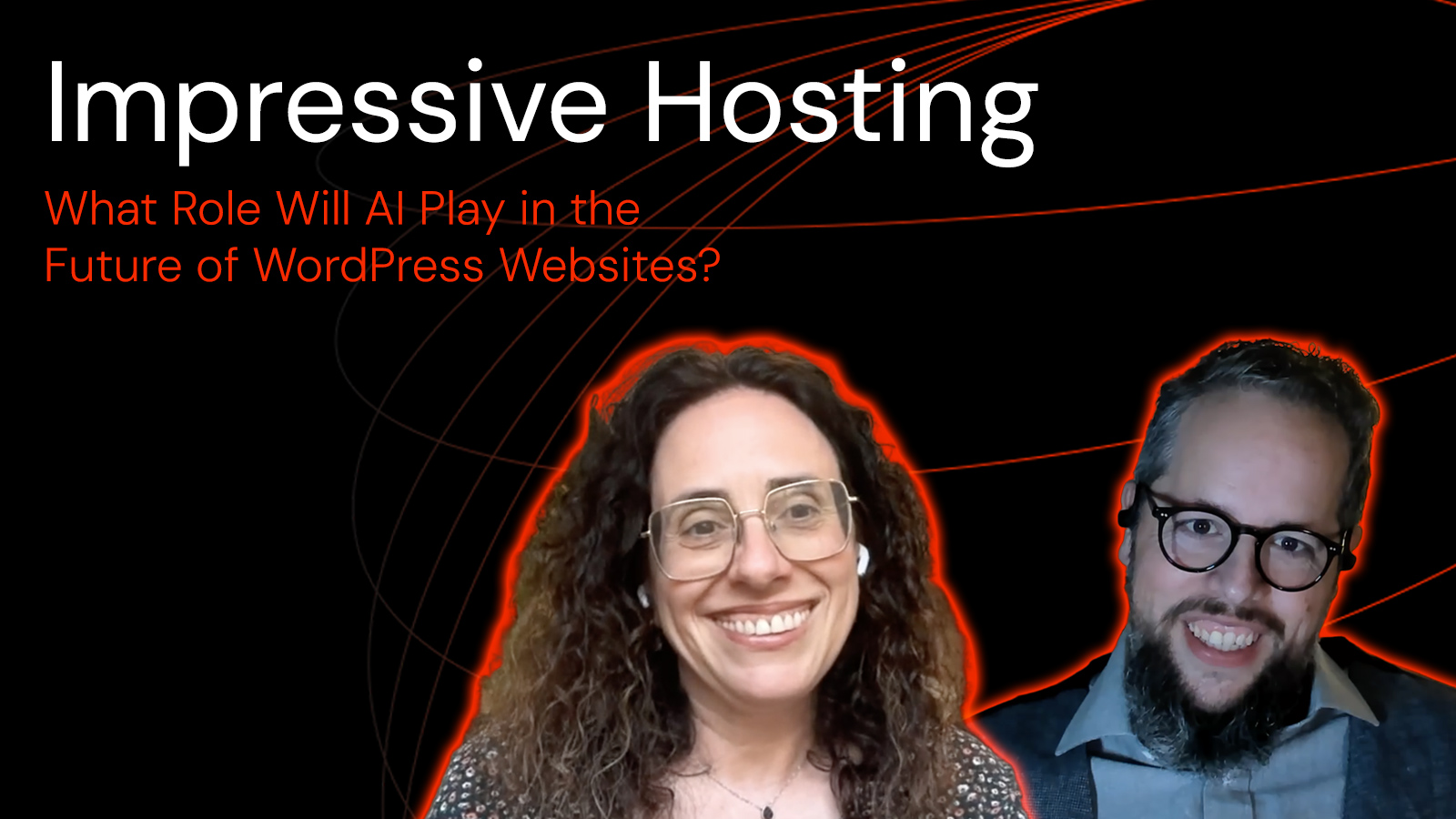
Agencies are the engine behind a massive share of WordPress websites, yet for years they were treated as an afterthought by hosting companies and platform makers. Jesse Friedman and Miriam Schwab dig into why that’s finally changing. Miriam, who ran her own agency before joining Elementor, brings a firsthand perspective on what agencies actually need from the companies whose tools they depend on.
A key theme in this conversation is the difference between collecting feedback at scale and learning from real relationships. Jesse shares his approach of putting his personal phone number on the WP Cloud website. Miriam talks about hosting local WordPress meetups in her office to hear directly from builders. Both agree that even two or three honest conversations with agency owners can reveal more about product shortcomings than thousands of support tickets.
The episode also covers what Jesse and Miriam are hearing from WordPress communities around the world. Miriam and Jesse discuss how open source and AI together can lower the barrier to entry for people around the world, and why hosting companies should think about global accessibility as part of their product strategy.
Links:
- Elementor
- Elementor Partners Program
- Hidden Door
- Bluehost
- Hosting.com
- CloudFest
- WordCamp Europe
- WordCamp Asia
- RT Camp
- Post Smith
- WordPress VIP
Transcript
Jesse Friedman: Welcome to Impressive Hosting, a podcast about the role hosting plays in shaping the open web. I’m your host, Jesse Friedman. On this show, we go deeper than uptime and dashboards. We talk about hosting as infrastructure, about ownership, independence, and what it takes to build ethical, high-end WordPress hosting that actually serves creators, businesses, and the internet itself. Before we dive in, head to impressivehost.com. That’s where you can comment on episodes, ask follow-up questions, and help shape future conversations. You’ll also find links to follow, like, and subscribe wherever you listen. Today I am joined again by Miriam Schwab, head of WordPress at Elementor, and Casey, her dog. Hey, Casey.
Miriam Schwab: Well, hello. Casey’s always wanted to be on a podcast, so she’s very excited.
Jesse Friedman: As is what we do here, we fulfill dreams.
Miriam Schwab: Casey thanks you. But now I’m gonna just put her out the door before she starts barking when she thinks there’s a cat or something.
Jesse Friedman: And while you do that, I’ll just say that for everyone at home, this is episode two with Miriam. So I’d suggest going back and listening to episode one because we had such a great conversation. We talked about Elementor, we talked about Miriam’s past, we talked about Angie, the AI tool that lives inside of Elementor. We talked about agencies and how people are using Elementor to build websites as implementers, maybe not as developers. We covered a lot in the first episode, so it’s definitely a good listen. For anybody who’s paying attention, I’m actually not at my normal space. I’m in New York today because I’m giving a talk later tonight. A fireside chat with Hillary Mason, the co-founder and CEO of Hidden Door. It’s an AI card game tool. And so I’m at the Automattic lounge today, so that’s why things are looking a little different.
Miriam Schwab: So cool. The context, the people. Anyways, that sounds amazing.
Jesse Friedman: It’s gonna be a lot of fun. So we left off talking about how my wife had built a website using Elementor to showcase her book. And that someone who had designed a theme for authors was using Elementor as a dependency, which I found interesting. I’m thinking about that person as an implementer, as a designer. But we also talked about agencies and the importance of agencies in providing a good experience for WordPress and everything else. I’m curious from your perspective, as someone who’s been around the WordPress community for a long time and knows hosts, agencies, all this stuff. Why do you think there’s such a push these days for hosting companies to work with agencies directly? It seems like everybody’s developing an agency program and doing things to appeal to agencies. What is the draw there? Is it money? Is it something else? What do you think is going on?
Miriam Schwab: So as a former agency owner, part of me is like, finally. Agencies totally deserve attention. The ones that keep building websites with particular platforms should be embraced and recognized. In every ecosystem, or even society, there are different statuses, and agencies were never really a high-status type of player in the industry, just in terms of perception. But if we want an industry or a business to keep going, we need to embrace the people, the companies, and the organizations that keep building over and over with our products. So I feel like everyone is late to the game. That kind of includes us, by the way. We know that a lot of our users are agencies and we’ve always had good lines of communication with them and supported them whatever way we can, but we actually didn’t have an agency program until now. We have this program that we just launched called the Partners Program, which I recommend that people building with Elementor check out. I think it has some real benefits for them. When businesses launch an agency program, there’s obviously an economic aspect to it, which is encouraging these companies to keep building with the platform. It just makes a lot of sense. Agencies really are our partners. I think Elementor is right in calling it a partner program. They’re the ones who use our product, put it out there over and over again, give us feedback, and help us improve it. I’m just glad to see them recognized like that.
Jesse Friedman: Yeah, I agree. It’s something that’s been around for a while with different hosts. Automattic has had something for a long time. Bluehost has had an agency program for well over two years now. But I feel like there’s definitely a shift towards identifying agencies as, as you said, an economic benefit to the hosting company because a lot of money is spent by agencies and their clients. But also from the perspective of being able to listen. We had Corey Miller on from hosting.com and he was talking about how they have this agency program that comes with a webinar series and open office hours where agencies come and ask questions. They do that for free. You don’t have to be a customer of hosting.com, you don’t have to be paying for services. You can just come and ask questions of experts and get some feedback. What that does is create a two-way line of communication where you’re answering their questions, but you’re also learning about the things they’re struggling with, which allows you to make a better product. It’s funny because I’m often pushing hosting companies to think about the fact that while the WordPress community is made up of passionate people, often developers and agency owners, that makes a small subset of the total users around the world who are using WordPress. The vast majority of WordPress users are not agency owners by any means. But there is something really magical about building something in a way that an agency owner can use it and having the benefits of that trickle down to the DIYers. Agencies are going to be able to give you feedback better than probably any DIYer ever will, because they can articulate what they need better than somebody who’s trying to learn the software while also building on it. So how are you actually listening to agencies at Elementor? Are you having webinars, open lines of communication? How is the feedback actually funneling back to you?
Miriam Schwab: So at the moment it’s not very structured, but as part of the partners program, it’s becoming more structured. Until now, we’ve had relationships with them and they can talk to us in various ways and give us feedback. They can open GitHub issues, they can reach out to our support. We have shared Slack channels with a lot of different organizations, and some of them are agencies.
Jesse Friedman: It sounds like you’re where they are. You’re making it accessible for them to give feedback in whatever tools they want to use.
Miriam Schwab: That’s what we’re trying to do. Agencies play a very strong, outsized role in the decision making of the companies who are their clients. The companies that hire them are trusting them not only to build their site, but to make technical decisions. So if an agency says your site should be WordPress or your site should have Elementor, the company will say yes. There’s very little pushback on that because the agency is the expert. So it’s really good to support them and also hear their feedback. A lot of agency feedback revolves around their workflows, which I can relate to from my agency days. Because they’re managing many sites and their projects are time-based, every minute they’re not spending actually building a site is costing them. They want to be efficient and they don’t want friction. They don’t want anything that will cost them extra time. So a lot of it is around workflows, which is really interesting and definitely deserves support.
Jesse Friedman: That’s really great feedback. You know what’s interesting is when you and I see each other at events, someone will say something like, oh, Jesse knows everybody, or vice versa. And I’m like, listen, I don’t even compare to Miriam. Miriam knows everybody and everybody knows Miriam. I’m curious, are you personally forming relationships with agencies? I feel like you would be. And sometimes it’s a lot easier than just a form or a GitHub issue. It’s just having that actual tangible relationship where you can call someone up or they can email you. Are you doing that pretty effectively at these conferences?
Miriam Schwab: I do know a lot of people in the WordPress space and I love knowing all these people. I learn a lot from everyone and I genuinely appreciate knowing all sorts of people. But I realized at one of the last WordCamps I was at, I think it was in Portland, that I don’t know enough people at agencies. I know the people at the agencies that are always top of mind. The larger ones, the WordPress VIP partners and those types. I’m very friendly and connected with them. But then I realized there’s this whole section of agencies that aren’t them, who are building a lot of high-quality sites, and I don’t know who they are. They’re harder to know, at least through the conference circuit, which makes sense. If you’re an agency, every minute you’re not working on sites costs you, so it’s very hard to justify the cost of travel, accommodation, and time away from your work. Now, if I had the chance to talk to them, I would tell them that I built my career, including my agency, around events. The first international WordPress event I was able to attend was WordCamp Europe, the very first one in Leiden, and it was a game changer for me. I don’t know, maybe this is something we can impart to agencies as part of our programs, but the value of in-person relationships is real. Yes, it doesn’t pay the bills at the moment, and you don’t know if it will ever have any economic impact, but it can truly shape how your agency develops and grows. It also impacts how people see you as an authority and a trustworthy figure. But the ROI isn’t quantifiable, so they don’t come enough. I don’t meet them there. It’s something I’ve been thinking about how to improve. I’ve had the chance to meet more agencies since then, but it does demand more of an effort.
Jesse Friedman: Sure. Sometimes it’s a lot easier than cutting through all the bureaucracy and everything else to just form a relationship with someone. It’s funny because one of the things I did with WP Cloud is if you go to the WP Cloud website, my phone number is on the contact page.
Miriam Schwab: Oh really?
Jesse Friedman: Yeah. People were like, you’re crazy. You’re gonna get inundated with phone calls. And in fact, it’s actually kind of nice because my phone is not ringing all the time. I think people, despite the fact that my face is on it and I’m saying this is really me, still think it’s going to go to some recording or something. So I’m not inundated yet. This might change everything. We’ll see. But it allows people to just give me a call and cut through everything else and say, tell me about WP Cloud. I think there’s massive value in a hosting company, and we’re talking to hosting companies on this podcast, in developing those relationships with your customers. We talk about this a lot. It’s about aligning yourself with the success of your customers, but how do you do that if you don’t know what success means to them? Getting out to those conferences and meeting them where they are, whether it’s going to a big WordCamp, and as you said, that’s a big investment for an agency because it’s not just the money, the plane ticket and the hotel, but the time away from their desk. It’s non-billable hours. That’s how agencies work. How many billable hours do they have? That’s how they pay their employees, that’s how they do everything. But maybe it’s not about going to a conference. Maybe it’s finding out where they are and going to meet them and saying, hey, can I come to your studio and see how you work? I think that’s an underrated, underutilized methodology for understanding your customer base. A lot of hosting companies, a lot of big companies like Elementor and Automattic, have the means to do this. We just need to be willing to do it. And I think that’s an interesting lesson.
Miriam Schwab: Yeah, it is interesting. It’s hard to scale that. The CloudFest conferences, the recent one in Germany and the upcoming one, and last year’s as well in the States, actually put a strong focus on agencies. I don’t know technically what they did, but they made it very appealing and accessible for agencies to come to their conferences because they know that all of us want to talk to them. They want to bring us value. So they figured out some way to draw more agencies. Maybe other types of events can do that as well. It’s a win-win. Agencies would benefit from being at these types of events and meeting people, and then of course the hosting companies and other companies who want to meet them would have an easier way to do it. It was just interesting to me that they focused in such a determined way on making sure agencies could come, and not just in a “hey, agencies come” kind of way. They actually helped them in some way. So hopefully we can see more of that.
Jesse Friedman: You’re absolutely right that that idea may not scale. But at the same time, I think one of the things we underestimate is how much you can learn from a single conversation. In the days when I used to build products, it was always really helpful to suck in data while people are using it at scale. But one of the things I used to do was sit at a Starbucks, buy a bunch of Starbucks gift cards, and say, hey, if you want your coffee on me, just come sit with me real quick and try to fill out this form or launch this thing or whatever. It would be five or ten minutes of their time and they’d get a free coffee out of it. I would actually learn very quickly what the struggle was. And the funny thing was, I didn’t need to do that 50 times. I didn’t need to do it a hundred times. Two or three times and you gain so much information that you can apply to your product and make it so much better. I think that’s something hosting companies can benefit from in learning about their agencies. You don’t need to have a thousand relationships. It’s good to pull in data at scale while they’re using your product, but having a couple of strong relationships and beta testers and people who can try your products out early is probably enough to make a significant difference and a major impact on the product you’re actually producing.
Miriam Schwab: Yeah, I totally agree. You’re right, it doesn’t have to be huge numbers. Now you’re making me think. I organize a local WordPress meetup in our office. We do it once a quarter. I can’t handle more than that, it’s already a thing. But once a quarter I can do it, and it draws web builders of different kinds, whether they’re working solo or they’re part of agencies. That’s a way to get access to these types of people. That’s not why we were doing the meetups originally. I didn’t actually know who was going to start showing up. We give talks, we have people come in and give talks, and the questions from people who are truly sitting and building are really interesting questions. And we can talk to them and ask, how are things going? What are you using? What do you like, what don’t you like? I guess companies that want more contact with agencies could do something similar. At the very least, wherever you are, there are people building websites and you could just invite them over. We give them pizza and beer.
Jesse Friedman: Pizza and beer goes a long way.
Miriam Schwab: It’s a big draw. People will show up for pizza and beer and they love it. Anyways, yeah, these are different ways to do it.
Jesse Friedman: That’s very true. So you’re traveling more than most in this industry. How many weeks or days are you on the road in a year?
Miriam Schwab: Last year was my record-breaking year. It doesn’t sound like that much, but I traveled internationally nine times. For me, that was a lot. I would come back, kind of rest, and then get up and go again. You know, often going from here to the west coast just finishes me off. I had a lot of that last year. So yeah. But this year, because of the war, our airspace was closed, so I literally didn’t have an option. I was supposed to go to CloudFest and speak, and WordCamp Asia to speak. Didn’t go to either. Our team from overseas filled in at both places and did an amazing job. WordCamp Asia was really nice. The organizers let me give my talk remotely, so at least I got to be part of it that way. So this year I haven’t traveled at all, which I have to say has actually been pretty nice for me. But I’m very much looking forward to going to WordCamp Europe. I really hope that works out. I’m excited. I miss everyone. I really want to reconnect with the WordPress community. Yeah, I’m excited about that.
Jesse Friedman: It’s really interesting because I know what it feels like to be forced home. At first it’s challenging and stressful and you’re like, oh my god, so much of my life is about travel. But then it’s like, oh wait, I can breathe. I can build routines at home, I can get a lot of stuff done. But I’m curious, in all the time you’re spending out there traveling, you’re learning from agencies, hosts, product developers, whatever it might be. What are some common themes that you see that are worth noting, themes that transcend geography? And on the flip side, what are some things that are hyper-specific to a particular location?
Miriam Schwab: Interesting question. Our industry is dynamic enough that every period of time there’s a different theme concerning people. I would say AI, and I hate to come back to it because it’s the most overused term, but people are very interested and worried.
Jesse Friedman: Right.
Miriam Schwab: Interested and worried. They want to know what we’re doing about it, they want to try to get our insights. Everyone’s hoping someone is a prophet who will tell them what will be. It’s so chaotic that we’re all just guessing. We’re trying to make as educated a guess as possible, but whatever we’re doing now is based on a context that’s been totally upended. Usually you plan based on history and past context, but that’s gone out the window. So we’re all just trying to figure it out. AI is definitely something universal.
Jesse Friedman: Yeah, so it doesn’t matter if you’re from South America, Africa, Asia, whatever. AI is top of mind.
Miriam Schwab: Top of mind. Will it replace me and make me irrelevant? Will the bots take over? Or will it give me more capabilities and help me thrive? And if so, how do I do that? Because there are so many options out there. Even if you’re just using Claude, every second there’s something new. Now there’s Claude design, Claude routines, Claude Code, Claude desktop. Then there’s plugins, agents. Okay, I’m gonna stop. But people are desperate to know all this stuff and also to make a decision and go with something. I’m the same. So that’s top of mind everywhere, there’s no question. I think all of us in the industry are doing our best to bring tools that help people do their jobs better rather than replace them. I think that’s really the approach, and I think that’s probably how a lot of AI will roll out in general. It might mean fewer hires of a certain type or whatever, but at the moment it’s not necessarily about replacing people, it’s about augmenting them. So we’re all trying to figure out how to do more with it. That’s the same in WordPress, and it’s part of what we’re trying to get across. AI isn’t here to replace you. The human in the loop is important. I truly believe that. As I use AI, I see how much Claude needs me as much as I need it.
Jesse Friedman: Sure.
Miriam Schwab: And it’s the same with Angie and everything.
Jesse Friedman: I think there’s a real fallacy in the way people interpret how effective a single prompt is. I think people are thinking about AI like, oh, that was written by AI. Well, okay, maybe it was written by AI, but if it’s actually a good read, it means that someone put a lot of time and effort into it. And if somebody’s putting their name on it and they’re a person of integrity, then you might feel a little more comfortable with the fact that maybe they were using it to accelerate or polish it or something along those lines. But there’s this mentality that it all just went straight from a three-sentence prompt to fully live. And I think that’s a complete fallacy. There’s still a ton of work going into it and a lot of human touch. The idea that AI is going to replace everybody, I mean, the problem is we are seeing layoffs happening in major corporations that have hundreds of thousands of employees. And that paints a picture of economic downturn and everybody losing their job. But I think the reality is that it’s just a new phase we’re all living in, and you have to adopt AI to accelerate your own work. Like we talked about in the first episode, building a staff of AI agents. Now you aren’t replacing your employees with AI because you don’t have direct reports. You mentioned that yourself. But now all of a sudden you do have direct reports that are AI agents. These are not AI agents that replaced people. They’re just orchestrating tasks on your behalf and lifting you up to do more. Or maybe creating more work for you, and we talked about that too. So we have to get our heads around what is actually happening. It’s not the apocalyptic economic event the media is portraying. Who knows though, right? Because as we also said, everything’s changing in a matter of months. Anyways, that’s part one. Part two, what are some things you see in very specific areas? Top of mind for me is always price sensitivity in different geographic locations. But what else is there? What have you seen in your travels?
Miriam Schwab: I find the Asia region to be really interesting. I am really sorry that I had to miss WordCamp Asia because I love connecting with the community there. They’re so passionate and enthusiastic. In different areas, people have become cynical, and I understand why, but it’s really fun to be around people who are just so excited and hungry to learn. That’s the Asia region. In India we have a very large, enthusiastic user base. At the same time, very few of them pay us for our premium products. But enough of them do that it’s an area that is interesting from a business perspective. We get the most amazing feedback and input from our users there. They’re heavy users, very smart, doing very interesting things. I love hearing from them. Our team has collected such interesting feedback from users there. They’re just hungry to learn more, do better, and go further with our products and with WordPress in general. That’s a very interesting region to me in terms of the ecosystem, the community, learning, and connecting. I love it.
Jesse Friedman: You know, I had dinner with Raul from RT Camp, and he was telling me that they get applications in the tens of thousands a year from India. It’s crazy.
Miriam Schwab: Oh my.
Jesse Friedman: Obviously they can’t hire everybody. So he took the time to think about how he can make an impact on his local community while sifting through all the people he’s hiring. They ended up developing a training system that acts as a litmus test. If you can pass this training, you further yourself through the application process. If you can’t pass it, take the training and now he’s empowering his local community to do so much more in the space. In the first episode we talked about how you had a conversation with someone who was able to use Elementor to take their mom on a trip because you empowered them to make a living. RT Camp is kind of doing the same thing. They’re developing this WordPress-focused training and empowering people to create a living and do more. So even if they don’t get the job at RT Camp, they’re gaining the skills to get a job somewhere else. The really cool thing is that all you need is a laptop and you can build a living. And maybe a laptop isn’t accessible to everybody in India, but while I was there I noticed that a lot of people have a smartphone. And if you look at Android’s most recent development, Android now allows your phone to act as a desktop. You can hook up your phone to a monitor and do a whole bunch of stuff on it. I have a $30 keyboard that folds into nothing and I can keep it in my back pocket. Now I’m able to type and do a whole bunch of stuff. And with AI there’s so much I can do just on my phone and a little keyboard. In fact, I don’t even need a keyboard. I can just use my voice and talk to AI. So it’s really interesting. We’re talking about AI and the fear of it eliminating jobs, but in fact maybe it can empower people to be employed across the whole world. They can actually make a living by utilizing it.
Miriam Schwab: WordPress from the start. I mean, why was I able to build a career off WordPress? Because the startup costs are very low. Yes, you need a computer and we can’t belittle that, but you don’t really need anything else. I was able to just start playing around with it, learning. I had internet access and a laptop and that’s all I needed. So the startup costs are really low, and in different regions that is a huge boost. There’s another founder, his name is Sagar Patel from a company called Post Smith. He built a lot of products around Elementor, add-ons and extensions, and he’s done very well with it. He also, like Raul, feels very grateful for his position and wants to give more. He loves all the people he can hire but can’t hire everyone. He’s found different ways to give back to his community. These people who are empowered through open source tools like ours to build themselves up, build a business, and then support others by hiring them and supporting their communities. It’s an amazing thing that has very broad impact. And AI could be the next natural evolution of that. It makes a lot of sense. Giving people more capabilities to build more things and empower themselves and others. We’ll see how it plays out, but I like to be optimistic and think that’s where it’s going.
Jesse Friedman: Yeah, me too. Alright, we’re almost at time here. I was at WordCamp Asia and one of the nice things was that a whole bunch of people were coming up to me, a lot of them students and people just getting started with their careers, using WordCamp as a springboard to network and meet people. We mentioned before that you’ve been in WordPress for a long time. You’ve been a woman in tech for a long time in a predominantly male-dominated industry. I’m curious, just to leave this episode on a high note, what advice would you give to someone who’s just getting started today? It can be anything specific, or you can answer broadly. What would you impart on somebody who’s trying to get started in this world?
Miriam Schwab: A lot of the learning is on you. You have to sit and learn. There’s no way around it. Hopefully you’re excited and passionate enough about it that you will. That’s what I did in the beginning. I was so excited about WordPress. I would sit for hours reading and learning and building. Definitely build. Don’t just read. At certain points in my career, when I was learning something new, I realized I had to stop reading and learning and start doing. There’s no substitute for doing.
Jesse Friedman: Yep.
Miriam Schwab: One of the great ways to build your career in WordPress, and I think we’re fortunate that WordPress is like this, is that as you build, share your knowledge. People really appreciate it. I learned from people sharing their knowledge, and so I started writing posts about what I learned and people appreciated that. It’s also a good way for people to get to know you and to stand out. You might think, going against the grain here, well, I just learned something, I should keep that knowledge to myself because it’s valuable. But actually in an open source ecosystem, sharing your knowledge is valuable. It helps others and can also help you. So I encourage people to make mistakes, break things, mess things up, and then learn from that. Share your learnings with others, and we all build ourselves up together. It can really help your career. And for women especially, I highly recommend finding speaking engagements. You can start small, start local, wherever you are. I know people say they’re more afraid of public speaking than death or something like that.
Jesse Friedman: Right, the world’s worst fear. Yeah.
Miriam Schwab: I totally get it. I was terrified in the beginning. But it’s a really good way to share your knowledge. Public speaking helps people get to know you. And in general, it’s a good skill to learn because in the end, AI can’t take this away from us. We’re communicators. It’s about how we communicate with each other. If you can learn to do that, and it’s okay if you don’t do it well in the beginning, you’ll get better. Then that helps in that way as well. So put yourself out there. I know it’s hard. And don’t feel stupid. You might think, oh, I’m sharing about a mistake I made. Believe me, if you did it, other people did it too. They also want to know how to solve that issue. There’s no such thing as a stupid mistake. Mistakes are actually the best way to learn, and sharing them helps people connect with you as well. So anyways, that’s just some advice.
Jesse Friedman: That’s really great advice. There’s so much value in sharing your knowledge, as you said. But I think that vulnerability and being honest about what you’re dealing with and what you’re struggling with creates a layer of trust between you and whoever’s listening. It actually reinforces the behavior we want, which is everybody working together and lifting each other up. I mean, I wouldn’t be here myself if I didn’t get involved in the WordPress community and listen to what other people had to say and take their advice. I’ll just add one thing to what you said. If you are afraid of public speaking, there is probably no better place to try it out than a WordCamp. About 80% of the speakers are first-time speakers trying to get started themselves. The audience is going to be really appreciative that you’re there. They’re going to give you a lot of grace. They’re not going to throw tomatoes at you when you screw up. They’re going to be very supportive. So great advice, Miriam. Thank you so much for joining the show, and I look forward to having you back. I can’t wait to see you again in person.
Miriam Schwab: Me too. And thank you for having me. This was a fun conversation.
Subscribe to Impressive Hosting:


Leave a Reply