'%3E%3C/path%3E%3Cpath d='M76.4782 25.7185L71.982 9.04089H74.6936L78 22.8409L81.8045 9.04089H84.5853L88.2722 22.8409L91.5787 9.04089H94.2902L89.7248 25.6977H86.7781L83.1396 12.6379L79.3835 25.6977L76.4782 25.7185Z' fill='rgba(247, 43, 0)'%3E%3C/path%3E%3Cpath d='M96.6075 9.04089H102.439C103.739 9.04089 104.818 9.26224 105.676 9.69803C106.534 10.1338 107.17 10.7287 107.592 11.4827C108.014 12.2367 108.222 13.0875 108.222 14.0421C108.222 14.9483 108.021 15.7783 107.613 16.5254C107.212 17.2794 106.575 17.8812 105.725 18.3239C104.867 18.7666 103.774 18.9879 102.439 18.9879H99.1323V25.6977H96.6075V9.04089ZM99.1323 16.9128H102.321C103.511 16.9128 104.362 16.6568 104.881 16.138C105.399 15.6192 105.655 14.9206 105.655 14.0352C105.655 13.1152 105.399 12.3958 104.881 11.8839C104.362 11.372 103.511 11.1092 102.321 11.1092H99.1323V16.9128Z' fill='rgba(247, 43, 0)'%3E%3C/path%3E%3Cpath d='M124.138 25.9744C122.492 25.9744 121.067 25.6147 119.87 24.8953C118.674 24.1759 117.747 23.166 117.097 21.8725C116.446 20.5789 116.121 19.0848 116.121 17.3901C116.121 15.6746 116.446 14.1735 117.097 12.88C117.747 11.5864 118.674 10.5765 119.87 9.84329C121.067 9.11698 122.492 8.75036 124.138 8.75036C126.089 8.75036 127.68 9.22766 128.918 10.1753C130.156 11.1299 130.938 12.458 131.277 14.1735H128.469C128.247 13.2051 127.77 12.4373 127.044 11.8631C126.317 11.289 125.342 11.0054 124.118 11.0054C122.45 11.0054 121.136 11.5726 120.168 12.707C119.199 13.8415 118.715 15.3979 118.715 17.3831C118.715 19.3476 119.199 20.8971 120.168 22.0246C121.136 23.1521 122.45 23.7124 124.118 23.7124C125.342 23.7124 126.317 23.4427 127.044 22.9031C127.77 22.3636 128.247 21.6234 128.469 20.6896H131.277C130.945 22.3428 130.156 23.6294 128.918 24.5702C127.68 25.5109 126.089 25.9744 124.138 25.9744Z' fill='rgba(247, 43, 0)'%3E%3C/path%3E%3Cpath d='M133.961 25.6908V8.5636H136.486V25.6908H133.961Z' fill='rgba(247, 43, 0)'%3E%3C/path%3E%3Cpath d='M145.195 25.9744C144.067 25.9744 143.057 25.7185 142.158 25.1997C141.259 24.6809 140.553 23.9615 140.027 23.0346C139.502 22.1076 139.246 21.0216 139.246 19.7903C139.246 18.5591 139.509 17.4731 140.041 16.5392C140.574 15.6123 141.293 14.8929 142.192 14.3741C143.099 13.8622 144.102 13.5994 145.215 13.5994C146.343 13.5994 147.353 13.8553 148.252 14.3741C149.144 14.8929 149.864 15.6123 150.396 16.5392C150.929 17.4661 151.192 18.5522 151.192 19.7903C151.192 21.0285 150.929 22.1076 150.396 23.0346C149.864 23.9615 149.144 24.6809 148.245 25.1997C147.332 25.7185 146.315 25.9744 145.195 25.9744ZM145.195 23.8093C145.796 23.8093 146.357 23.6571 146.869 23.3597C147.387 23.0553 147.802 22.6126 148.121 22.0177C148.439 21.4228 148.598 20.6827 148.598 19.7903C148.598 18.898 148.446 18.1579 148.134 17.563C147.823 16.9681 147.415 16.5185 146.896 16.221C146.377 15.9167 145.824 15.7714 145.222 15.7714C144.62 15.7714 144.06 15.9236 143.548 16.221C143.029 16.5254 142.614 16.9681 142.296 17.563C141.978 18.1579 141.819 18.898 141.819 19.7903C141.819 20.6827 141.978 21.4228 142.296 22.0177C142.614 22.6126 143.023 23.0622 143.534 23.3597C144.032 23.664 144.586 23.8093 145.195 23.8093Z' fill='rgba(247, 43, 0)'%3E%3C/path%3E%3Cpath d='M158.275 25.9744C156.85 25.9744 155.723 25.5317 154.906 24.6394C154.09 23.747 153.682 22.4258 153.682 20.6688V13.8899H156.207V20.406C156.207 22.6887 157.141 23.83 159.015 23.83C159.949 23.83 160.717 23.498 161.326 22.834C161.927 22.1699 162.232 21.2153 162.232 19.9771V13.883H164.757V25.6908H162.522L162.336 23.6225C161.969 24.3488 161.436 24.9299 160.731 25.3449C160.011 25.7669 159.195 25.9744 158.275 25.9744Z' fill='rgba(247, 43, 0)'%3E%3C/path%3E%3Cpath d='M173.341 25.9744C172.2 25.9744 171.19 25.7046 170.318 25.1651C169.447 24.6255 168.762 23.8854 168.271 22.9515C167.779 22.0177 167.53 20.9525 167.53 19.7627C167.53 18.5729 167.779 17.5146 168.271 16.5876C168.762 15.6607 169.447 14.9275 170.325 14.4018C171.204 13.8692 172.213 13.6063 173.362 13.6063C174.296 13.6063 175.119 13.7861 175.824 14.1528C176.53 14.5194 177.083 15.0313 177.478 15.7022V8.5636H180.002V25.6908H177.74L177.478 23.8577C177.097 24.4111 176.571 24.9022 175.907 25.3311C175.243 25.76 174.385 25.9744 173.341 25.9744ZM173.791 23.7885C174.87 23.7885 175.755 23.415 176.44 22.6679C177.132 21.9209 177.478 20.9663 177.478 19.7903C177.478 18.6006 177.132 17.6391 176.44 16.8989C175.748 16.1588 174.863 15.7922 173.791 15.7922C172.712 15.7922 171.826 16.1588 171.127 16.8989C170.429 17.6391 170.083 18.6006 170.083 19.7903C170.083 20.5651 170.242 21.2568 170.56 21.8586C170.878 22.4604 171.314 22.9308 171.881 23.2767C172.435 23.6156 173.078 23.7885 173.791 23.7885Z' fill='rgba(247, 43, 0)'%3E%3C/path%3E%3C/svg%3E)
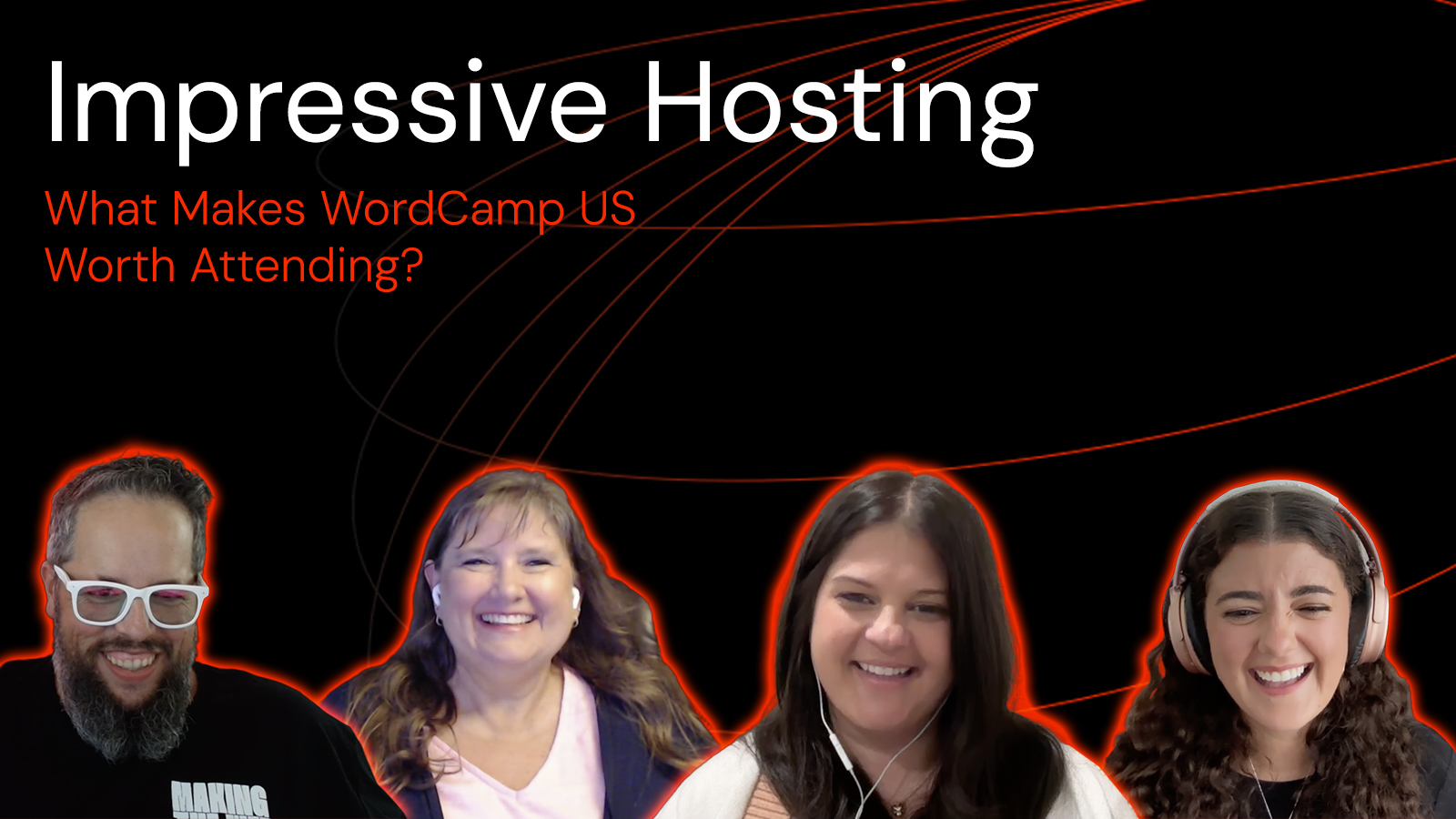
This episode is a practical guide to getting the most out of WordCamp US in Phoenix. Jesse Friedman sits down with organizers Megan Marcel, Caroline Harrison, and Carol Stambaugh to talk through the schedule, the sponsor hall, and the many ways attendees can connect with one another.
The organizers explain how stopping by sponsor booths benefits both the sponsors and the attendees. It is one of the few places where you can talk directly to the people building the future of the web. They also highlight the new makers market and share why the hotel lobby often becomes the best networking spot of the whole week.
Megan and Carol describe how a single hotel lobby conversation last year turned into a daily working relationship. That kind of story captures what makes this community different. With accessible pricing, a coupon (“WPCLOUD”) for 25 percent off, and something for every skill level, this episode makes a strong case for booking your ticket now.
Links:
Transcript
Jesse Friedman: Welcome to Impressive Hosting, a podcast about the role hosting plays in shaping the open web. I’m your host, Jesse Friedman. On this show, we go deeper than uptime and dashboards. We talk about hosting as infrastructure, about ownership, independence, and what it takes to build ethical, high-end WordPress hosting that actually serves creators, businesses, and the internet itself. Before we dive in, head to impressive.host. That’s where you can comment on episodes, ask follow-up questions, and help shape future conversations. You’ll also find links to follow, like, and subscribe wherever you listen. Today we have an awesome cast of folks helping us talk about WordCamp US. We have Caroline from Automattic, Megan from Automattic, and Carol from RadiateYou, all WordCamp US organizers, talking about what we’re gonna get to see and do at WordCamp US in Phoenix this summer. Before I continue, I want to make sure that everyone at home knows that if you’re thinking about buying a ticket to WordCamp US, you want to get your tickets now. And if you’re listening to this show, you get to take advantage of a coupon that I just got handed. It’s WPCLOUD, spelled out W-P-C-L-O-U-D, no spaces, and that gets you 25% off. So that $100 price tag we talked about in the last episode just dropped to $75. There are still benefits beyond just the conference as well. As Megan mentioned, students at home also get a year of hosting, so they get to put a website up for a whole year just for attending a conference. That’s really great. Now, at the last episode we finished off, and I encourage everybody at home to go back and rewind because we covered a ton of stuff about WordCamp US, events planning, and talking to agencies and folks. Carol, you had mentioned that one of the best things hosting companies can do is ask for horror stories from agencies so they can learn what to avoid, what people are thinking about. But it got me thinking, and I want to know, is there anything in the event space, Megan, or Caroline, if you have a horror story in that area that we should all hear?
Megan Marcel: I’ve got one, but full disclosure, this was not a WordCamp. We did have an event with about 100 people, and as people were returning to their sessions, one of the pipes broke. A sewage pipe, right outside the room as people were coming back. The pipe was flowing, and the hotel didn’t quite know what to do. They took a leaf blower to it. So it did teach us how to pivot. The learning there is we changed the attendee path to a different entrance and had to adjust some things really quick on the fly. It certainly taught us how to deal with the unexpected, and yeah, it was an experience, that is for sure.
Jesse Friedman: I can’t imagine making a situation any better by adding a leaf blower to it.
Caroline Harrison: Would that even…
Jesse Friedman: There’s no way. Not at all. But you’re right, it probably makes you…
Megan Marcel: Look at this movie poster.
Jesse Friedman: It gives you a ton of experience. Now when you put on these events, we talked a little bit about how well they come off and how great they are, and it’s only probably through these crazy experiences that you’ve lived through that you’re able to compensate for all the unplanned things.
Carol Stambaugh: It’s true.
Megan Marcel: As long as people don’t see it, it’s okay. We pivot, we work well under pressure, and just move quick on our feet when things happen. They always do.
Jesse Friedman: Right. So we talked a little bit about how this is a full-blown, really high-end tech conference with a low price tag, so it’s accessible to more people. How many people are we expecting? It’s in the thousands, right?
Megan Marcel: Yep.
Jesse Friedman: All right.
Megan Marcel: Just over a thousand or so folks.
Jesse Friedman: Okay, great. So if we’re thinking about that from a perspective of $100 a ticket, I would imagine we’re not even close to covering the cost of the event with ticket sales and all the things that go into it. So we have our sponsors to thank, and they get a booth. They bring their business, their brand, and their swag. What is it that you think sponsors want to get out of this conference? Obviously they want to connect with their customer base and sell more of whatever their product is. But when you think back to what a sponsor says after the event, what they wish there was more of, what would you tell attendees at home right now? If they want to give back in a sense, they got the super low price tag, how can they make the sponsors feel thanked for putting on this event?
Megan Marcel: Yeah, I would say definitely stopping by their booth. The sponsor hall is open on August 18th and 19th from 9:00 AM to 5:00 PM, and sponsors are in there along with loads of other things. I think really engaging, stopping by the sponsor spots, some of them will have demos, some will let you get hands-on with their product. I think not only does that give back to the sponsor, but it also gives you the opportunity as an attendee to get hands-on, to ask the hard questions. If you’ve been working with one of their products, you have their people right in front of you, and that in and of itself is just a huge value. Being able to get that often one-on-one conversation and support on a product that you’re maybe already using or were thinking about using, yeah, that’s probably one of the biggest things you could do.
Caroline Harrison: Honestly, to jump off of that, WordCamp US especially, all the WordCamps, this is one of the few places where you can actually talk in person to the people that are building the future of the web. So if there’s something on your mind that you want to talk about, or you want to compliment something, or you’re having problems with something, this is the place to do it. That sponsorship hall is going to be the place where you can directly talk to those folks, which I think is pretty cool. It’s a real in-person conversation, which is nice.
Carol Stambaugh: I was just going to say the same thing. Because when you’re new to WordPress, you come in and you meet some of these people at the sponsor booth, and they may have built the theme that you’re using. If you think about it, you don’t get to talk to the people at Microsoft who built Microsoft Word. But you get to talk to the people who built your theme or a plugin or something like that. That kind of real connection is really invaluable. Stopping by the booth isn’t just for the sponsor, it’s for you to connect and say, “I know your name, and in the future, if I have thoughts or questions, these people are very accessible.” So yeah.
Jesse Friedman: Yeah, I think that’s absolutely right. It’s a really amazing networking opportunity too. It’s not just to connect corporations and individual users, but it’s also an opportunity for folks to get to know people in their network. If you’re looking for a job, it’s a great opportunity to find employment. If you’re hiring, it’s a great opportunity to hire folks. There’s so much that goes into it. I double down on everything you guys said because I do the same thing. When I go to a WordCamp, I put out my calendar and make sure people have time to meet with me. I love to hear what’s going on, how they’re using the product, their horror stories, as long as it doesn’t involve a leaf blower. But yeah, it’s such a fantastic opportunity to get to know people and form friendships and relationships. You never know what you’re gonna set up for the future. You end up meeting people, and then two or three years down the road you realize you met this person at WordCamp US and formed a relationship with them, and now you can ask them to help you out, or get a reference, or whatever it might be. You never know what’s gonna come of it.
Carol Stambaugh: Mm-hmm.
Jesse Friedman: On that note, on the note of networking and forming friendships and relationships, it’s not all work, right? There is some play involved. What do we have in terms of after-hour events? What are we gonna be doing?
Megan Marcel: Yeah, so even before we get to after hours, happy to highlight that we have a new activation in the sponsor hall, which will be a makers market. Bringing in different sellers who are using WordPress, selling their goods and services. That’s a fun opportunity to meet some of the small businesses in and around Phoenix, get some goodies to bring home so you don’t have to make that stop in the airport gift shop. But you could do that too. And in the evenings, the hotel that was mentioned earlier, there is a hotel block with an incredible rate just a couple blocks away from the convention center. That becomes a natural extension of the hallway track of the conference, and people are often hanging out in the lobby there, having chats. So much good conversation and networking happens there. We’ll also have a page on the WordCamp US website, so definitely keep an eye there for side events. Several companies put together different events in the evenings that are hosted, and you can keep an eye out for those with sign-up instructions. There’s also the thank you party, which is on the final evening, August 19th from 7:00 to 10:00 PM. It’s a closing party and a lot of fun. The conference has ended, but people continue the conversations. You often see all the connections that were made throughout the week from friends old and new, chatting and reflecting on the amazing sessions and workshops attended throughout the week. Sponsors are there, speakers are there, so it’s another opportunity to learn from one another.
Jesse Friedman: That’s awesome.
Carol Stambaugh: I want to echo the hotel lobby. That’s just the party that’s not a party. It’s where so many people gather. You can’t walk through the hotel lobby without seeing someone, and that’s where I met Megan last year. I hadn’t met her, and we met in the hotel lobby and sat and chatted.
Megan Marcel: Yep. And that took us on to a year later, now we’re…
Carol Stambaugh: Yes.
Megan Marcel: …chatting literally every day now. So it really is incredible what happened in that hotel lobby.
Carol Stambaugh: Yeah.
Jesse Friedman: That’s so cool. Are there still rooms available if people are thinking about going and looking for hotels?
Megan Marcel: Yeah, there are. The hotel block is still open, but definitely grab your room sooner than later as rooms start selling. So yeah, definitely join us there. There’s also a satellite registration that happens, so if you want to beat the line, get your swag and your badge early. And there is also, although just a very short walk, a golf cart ride to and from the convention center. Some good perks that pop up by staying with us as well.
Carol Stambaugh: I’m local. I only live 20 minutes from downtown, but I’m staying at the hotel because that’s the full experience of WordCamp, I think. I would even encourage locals who are seeing this to take advantage of the rate. Here in Phoenix, we always talk about summer staycations because nice hotels offer a good rate, and it’s a very common thing. Use this as your staycation for those Phoenix locals.
Jesse Friedman: Yeah, for sure. I think you’re right about the hotel lobby. One of the things I notice is I’m always running into people, and I think sometimes I get recognized and there’s a little hesitation from folks to come up and say hello. I would love to dispel any reason not to do that. If you see me at a WordCamp, if you see anybody, a speaker or someone who’s building something that you want to talk to them about, they’re at that WordCamp and that expectation comes with the whole thing. They’re there to talk to folks. If you’re a little bit nervous, that’s okay, but don’t let it stop you from reaching out and shaking a hand or introducing yourself. I tend to have some of the best conversations in the hotel lobbies in the morning during breakfast. On line getting some scrambled eggs or something, sitting down before the whole show begins. That’s the opportunity to reflect on what happened the day before, what we’re excited for that day, and yeah, it’s an awesome opportunity to get to know people a bit better. All right, so what’s the first day of this? This is a four-day camp, right? There’s a lot going on. Which day is Contributor Day? Is that the 16th?
Caroline Harrison: August 1, yep.
Jesse Friedman: And so if anybody is listening that isn’t familiar with WordPress and what a Contributor Day is, somebody wanna jump in and give us a two-second intro? Caroline, do you want to?
Caroline Harrison: Contributor Day? That’s when people get in the room and they are coding, they are working on WordPress. It’s so cool to see. You go into that room and you can almost feel the energy of people truly contributing to this open source. It is one of the most… Contributor Day happens to be my favorite as well, just because this is where things are really ramping up. It’s day one, people are in the room, and you’re actually producing something, which I think is kind of rare for a conference. You’re actually producing something while you’re there, and that collaborative in-person working is a baseline for what WordPress and open source is all about. It is really cool to see. So if you’re interested in Contributor Day, I highly recommend coming through for day one.
Carol Stambaugh: I’ll mention…
Megan Marcel: You don’t have to know how to code.
Carol Stambaugh: I was gonna say that. Yeah.
Caroline Harrison: Yep.
Megan Marcel: There’s a team that works on events like this throughout the year. So don’t let that scare you. There’s something for everyone.
Caroline Harrison: Yeah, absolutely.
Carol Stambaugh: My first Contributor Day, I was intimidated because you think you have to be a developer and code, and you create these visions of the people who make WordPress as being incredibly smart, and they are. But you don’t have to be a coder. You really do have to present your own talents. I am not a developer, but my talents are in different areas, and that contributes to the project as much as someone who writes a line of code.
Jesse Friedman: Yeah, and I think I might romanticize this a bit because I came up in the community going to camps and other things. I came up during a time when Jake Goldman was in Rhode Island. He runs, you know, formerly 10Up and now it’s called Fueled. J Trip was in Rhode Island, so James Jacoby. Nacin hung out a lot. So we had a really cool local WordPress community, and it was intimidating coming in during a time when you had these veteran WordPress, super smart individuals. Nacin now, I forget exactly his title, but he’s like a technological consultant to the White House or something like that.
Carol Stambaugh: Yeah, you mentioned that.
Jesse Friedman: Yeah, exactly. So we’re rewinding to like 2010, 2012, something like that, when we were really building the local WordPress community here in Rhode Island. And it was a little intimidating, but in hindsight, having all the knowledge and experience that I have now, I would’ve told my former self to get in there faster. You’re mentioning that you don’t have to be a coder, but also you don’t have to be an elite coder either. You don’t have to be someone with years of experience and tons of GitHub contributions or anything like that. You might be saying to yourself, “I don’t play in the same field.” But here’s the thing. Everyone in the WordPress community knows that the only way we keep everything going, that we preserve what we love about WordPress, is when we get more and more people involved in helping and supporting it. The only way to do that is to make people feel comfortable jumping in and supporting the project, whether that’s jumping into the Make Slack, or the documentation, or going to a WordPress event and learning how to contribute. If you could walk away from a Contributor Day with just the knowledge of making the tiniest little contribution. When I got my wings as an actual WordPress contributor, I had made, from a core code perspective, a very minor change. What I was trying to do was help the first-user experience. I had made a modification to that first banner you see when you install WordPress so that people knew what to do next. It was like 15 lines of code, nothing. But it actually changed the way people experience those first few moments inside of WordPress, and it had an impact. What it did for me more than anything else was it shed all that stress around what it is to contribute for the first time. Anytime someone’s going into a situation where they don’t know all the variables, how people are gonna react, how it’s gonna work, you have all this anxiety and stress. But if you could just go to Contributor Day and feel the passion in the room, and feel how fast people invite you to sit down and help contribute, you can browse all the opportunities, see what everybody’s working on. Even if you’re just getting to know people, get used to that room because then at the next WordCamp you can contribute, and then the next WordCamp you can help somebody else contribute. And then that builds and builds and builds. It snowballs in a way that’s a really powerful thing for the entire ecosystem.
Megan Marcel: Yeah. It’s genuinely magical.
Caroline Harrison: Yeah.
Jesse Friedman: Yeah.
Megan Marcel: It sounds cheesy, but it really is. It’s special, and it’s really cool to be a part of.
Jesse Friedman: Right. Yeah, for sure.
Carol Stambaugh: I love that story. Just 15 lines of code changed the way people experience something, and I think that’s a great metaphor that could be applied to so many different things.
Jesse Friedman: Well, and think about the fact that you’re contributing to software that powers 40-plus percent of the entire internet, right? Something that we sometimes take for granted, sometimes understand the importance of, but at the end of the day, the internet is the backbone of so much that we all do in our day-to-day lives, and you’re making a contribution to that. And Carol, you mentioned that a WordCamp is a unique event where you get to actually interact with the people who are building the software you’re using on a regular basis. It’s not like if you’re a huge fan of Spotify you get to go hang out with a Spotify developer, you know? But in this case, not only do you get to hang out with those folks and learn from them, but you actually get to contribute right alongside them in a project that so much of the internet is using. So you have 15 lines of code, but times what? Times 10 million? Times 100 million? However many times WordPress has ever been installed since then that that code was involved in. It’s a huge impact that you end up making across a backbone of our society. So I do romanticize it a little bit, but it is a big thing. It’s no small thing.
Caroline Harrison: That’s pretty cool, yeah.
Carol Stambaugh: Yeah.
Jesse Friedman: Yeah, for sure.
Carol Stambaugh: I’m reminded of a time at one of the WordCamp US events, I can’t remember which one, it may have been San Diego, when a friend of mine and I were sitting at a table and Robbie McCauley comes up and sits down and starts chatting. I introduce him to my friend and said, “Oh, you work at Beaver Builder? What do you do?” And he said, “Well, I built it.” We run Beaver Builder on so many sites. And I saw that connection on my friend’s face, like, “Oh, wow, you built what we use.” So that’s kinda fun, you know?
Jesse Friedman: Yeah, especially when WordPress has this way of helping people feel special. They build something, they launch it, they feel accomplished. There’s all these moments of delightful happiness. There’s frustration, and sometimes you wanna punch your monitor because there’s always learnings and opportunities. But you do have these moments where you’re continually delighting WordPress users, and that carries over in those moments when you actually get to meet the people who help make that possible, which is very, very cool. All right, so we covered Contributor Day. The next day isn’t going into actual workshops and sessions right away, right? We have an interstitial day where there’s a showcase. What is going on with the showcase day?
Carol Stambaugh: The showcase day is a really fun day. My first showcase day I was blown away because it’s subtly different. There are still sessions, you’re still sitting side by side with people. But the whole idea of showcase day is that people talk about what they’re really doing. We have two sessions lined up this year where we have the developer who led the project presenting alongside the client who had the project built for them. So you get to listen to and hear the story of this real thing that was built with WordPress, and you get to hear from both the client and the developing agency. It’s really cool to see, wow, that’s in the wild. We can have all these theoretical discussions about different things within WordPress, but showcase day, you actually get to see what’s out there, what’s happening, what people are doing.
Megan Marcel: Mm-hmm.
Jesse Friedman: Yeah, very cool. I think it’s an amazing opportunity to learn a little bit about the behind the scenes as well, right? How businesses are running, how they’re interacting with clients, what they’re launching, and all the things they get involved in. Are there also aspects of it that were like product showcasing, helping people understand what new things are out there in the WordPress space?
Carol Stambaugh: Yeah, there’s definitely AI taking a huge front-and-center role this year, and I would expect nothing less. That’s where we’re at. There are a lot of people who are going to be talking about that. We also have our WordPress AI group that’s gonna have a real big presence, and I’m not as much up on that. Megan may be able to talk about the Core AI team and what they’re doing. I’ve seen chatter of it. Can you speak more about that?
Megan Marcel: Yeah, so the Core AI team will be on site, many of them, in the sponsor hall. They’ll have a booth set up where you can go, ask questions, walk through demos right alongside them. There will be a post with a lot more information, but they’ll be available to literally chat to, pick their brains, workshop with them on the 18th and 19th of the conference.
Jesse Friedman: Very cool. Yeah, AI continues to come up on this show in a way where everybody wants to hear about what people are doing. I took my sabbatical last year in the fall of 2025, and taking three months off in that time range, it felt like I came back and five years had passed in terms of the technological advancements and everything else. I think at the very least, if you come to a WordCamp and do nothing else, you’ll figure out what everybody else is using, what they’re working on, how they’re progressing their own tools and building things, and you’ll keep your finger on the pulse of what’s going on in the industry in a way that I don’t think you can at any other conference.
Carol Stambaugh: There’s a lot of truth to that because I have been thinking a lot lately about what my day is like today versus a year ago. What do I do at my job? It’s so incredibly different how I’m doing my job today, and it will be different six months from now. At a WordCamp, hearing how other people are doing their jobs and how it’s evolving, I think it’s actually more important now than ever to attend things like WordCamp, because we’ve got to stay on top of this stuff. We thought it was moving fast five years ago.
Megan Marcel: Yeah.
Carol Stambaugh: Look at us now, you know?
Megan Marcel: Yeah.
Jesse Friedman: Yeah. So all right, then we have the showcase day done, then we have two days of sessions and learnings and all that other stuff. Anything worth highlighting before we wrap up, in terms of speakers or workshops or anything like that?
Carol Stambaugh: Well, we’ve got four tracks. A track for AI, a track called Honing Your Skills, Technical WordPress, and then brand new to this event is Beginning WordPress. And that Beginning WordPress is going to be very different than the other tracks. We are designing a curriculum that’s very specific to a beginning user, and they are going to learn from the ground up. While they’re in the workshop, they will be using WP Playground to build their very first version of their site. Once that workshop is over, they will be taught how to save their work, and then we’re gonna have a follow-up session right after, which we’re calling Office Hours. The Office Hours is gonna have a lot of volunteers, and those people who attended the workshop don’t have to come to Office Hours, they can go on and do other sessions. But we have a massive room where there will be help to get people to take the site they just created and make it live right there. They’re not gonna build a 100-page website with e-commerce in a day, but they can certainly build something they can put out to the world and have their website published just from that workshop and Office Hours. That’s kind of exciting, and it’s something we’ve never done before at WordCamp US.
Jesse Friedman: That is so cool. So if you’re a small business owner or someone who’s trying to build a portfolio website or whatever, and you’re in the area or you want to fly in for $100, well, if you use the WPCLOUD coupon we got, that’s 25% off, so $75. You can go to a WordCamp and actually get someone to help you launch your website. So if you’re sitting at home right now thinking, “I need to build a website,” you can carve out two days or four days and go to WordCamp US, and you’ll get through the process of figuring out how to get involved with WordPress, how to install it, how to use it, how to launch a website. Maybe you don’t get into the deep technical details, but you probably push out all the unknowns and the tough parts about getting started. What other conference can you do that at? I just mentioned how I went to that AI World’s Fair, and the idea of going in with very little experience in AI and coming out on the other side training agents and doing things like that is unheard of. But here, for almost nothing, you can get your events, you can party at the after party, you can get your food and your coffee and your air conditioning and stay cool, and also get a website launched.
Megan Marcel: Yeah.
Carol Stambaugh: And the people who come to the WP Beginner track get free hosting. We have a company that is going to provide them a coupon to get free hosting to launch that site. Pretty cool.
Jesse Friedman: Okay. That’s amazing. How many people do you think that workshop can actually hold? What kind of urgency is there right now to sign up?
Carol Stambaugh: One thing that we’ve done is we’re repeating the workshop twice. So there should be plenty of space. If it looks really full when you walk in the first day, you can come back the second day. The Office Hours will be there both days as well. The last day we are not repeating WP Beginner, but we’re going to do WP Intermediate. We’re designing a curriculum that’s very similar, that’s gonna have the same workshop style, and will dig in a little bit more into what plugins are out there. Now that I’ve got my basic site up, what can I do with it? Can I work on some brand changes and colors? What does this plugin do that lets me do something that a base website doesn’t do? So you can not just build, but you can also begin taking your site even further with the WP 202 class.
Jesse Friedman: Very cool. All right, we have to wrap up, but Megan, Caroline, I have one last question for you. When we were at WordCamp Asia, the after party was amazing. We were all dancing and having fun. Do you feel like we’re gonna have the same energy at this after party?
Caroline Harrison: Oh yeah. I’m expecting dancing.
Jesse Friedman: Nice. Very cool. All right, so for folks at home, one more time, use the WPCLOUD coupon to get yourself a ticket. Do it now before tickets sell out. I’ll see y’all in Phoenix, and I’ll probably be hanging around the Automattic booth, so keep an eye out for me there. Feel free to reach out and shake my hand and introduce yourself because that’s what I’m there for. I’m looking forward to seeing y’all and seeing everybody at home there too. Thank you all for joining.
Carol Stambaugh: Thank you.
Caroline Harrison: Thank you.
Jesse Friedman: Thanks for joining us on another episode of Impressive Hosting, where we uncover the core tenets of great WordPress hosting. Do you have a follow-up question for today’s guest, a thought or comment on anything we talked about, a future guest suggestion, or a hosting horror story? What do you think makes great WordPress hosting? All your comments shape the show. Drop them on impressive.host. We also appreciate you following us on social media and subscribing to the podcast on your favorite platform. Finally, do check out our list of open source projects that need support at impressive.host. Whether it’s code, community, or cash, you can make a difference. See you next time.
Subscribe to Impressive Hosting:


Leave a Reply