'%3E%3C/path%3E%3Cpath d='M76.4782 25.7185L71.982 9.04089H74.6936L78 22.8409L81.8045 9.04089H84.5853L88.2722 22.8409L91.5787 9.04089H94.2902L89.7248 25.6977H86.7781L83.1396 12.6379L79.3835 25.6977L76.4782 25.7185Z' fill='rgba(247, 43, 0)'%3E%3C/path%3E%3Cpath d='M96.6075 9.04089H102.439C103.739 9.04089 104.818 9.26224 105.676 9.69803C106.534 10.1338 107.17 10.7287 107.592 11.4827C108.014 12.2367 108.222 13.0875 108.222 14.0421C108.222 14.9483 108.021 15.7783 107.613 16.5254C107.212 17.2794 106.575 17.8812 105.725 18.3239C104.867 18.7666 103.774 18.9879 102.439 18.9879H99.1323V25.6977H96.6075V9.04089ZM99.1323 16.9128H102.321C103.511 16.9128 104.362 16.6568 104.881 16.138C105.399 15.6192 105.655 14.9206 105.655 14.0352C105.655 13.1152 105.399 12.3958 104.881 11.8839C104.362 11.372 103.511 11.1092 102.321 11.1092H99.1323V16.9128Z' fill='rgba(247, 43, 0)'%3E%3C/path%3E%3Cpath d='M124.138 25.9744C122.492 25.9744 121.067 25.6147 119.87 24.8953C118.674 24.1759 117.747 23.166 117.097 21.8725C116.446 20.5789 116.121 19.0848 116.121 17.3901C116.121 15.6746 116.446 14.1735 117.097 12.88C117.747 11.5864 118.674 10.5765 119.87 9.84329C121.067 9.11698 122.492 8.75036 124.138 8.75036C126.089 8.75036 127.68 9.22766 128.918 10.1753C130.156 11.1299 130.938 12.458 131.277 14.1735H128.469C128.247 13.2051 127.77 12.4373 127.044 11.8631C126.317 11.289 125.342 11.0054 124.118 11.0054C122.45 11.0054 121.136 11.5726 120.168 12.707C119.199 13.8415 118.715 15.3979 118.715 17.3831C118.715 19.3476 119.199 20.8971 120.168 22.0246C121.136 23.1521 122.45 23.7124 124.118 23.7124C125.342 23.7124 126.317 23.4427 127.044 22.9031C127.77 22.3636 128.247 21.6234 128.469 20.6896H131.277C130.945 22.3428 130.156 23.6294 128.918 24.5702C127.68 25.5109 126.089 25.9744 124.138 25.9744Z' fill='rgba(247, 43, 0)'%3E%3C/path%3E%3Cpath d='M133.961 25.6908V8.5636H136.486V25.6908H133.961Z' fill='rgba(247, 43, 0)'%3E%3C/path%3E%3Cpath d='M145.195 25.9744C144.067 25.9744 143.057 25.7185 142.158 25.1997C141.259 24.6809 140.553 23.9615 140.027 23.0346C139.502 22.1076 139.246 21.0216 139.246 19.7903C139.246 18.5591 139.509 17.4731 140.041 16.5392C140.574 15.6123 141.293 14.8929 142.192 14.3741C143.099 13.8622 144.102 13.5994 145.215 13.5994C146.343 13.5994 147.353 13.8553 148.252 14.3741C149.144 14.8929 149.864 15.6123 150.396 16.5392C150.929 17.4661 151.192 18.5522 151.192 19.7903C151.192 21.0285 150.929 22.1076 150.396 23.0346C149.864 23.9615 149.144 24.6809 148.245 25.1997C147.332 25.7185 146.315 25.9744 145.195 25.9744ZM145.195 23.8093C145.796 23.8093 146.357 23.6571 146.869 23.3597C147.387 23.0553 147.802 22.6126 148.121 22.0177C148.439 21.4228 148.598 20.6827 148.598 19.7903C148.598 18.898 148.446 18.1579 148.134 17.563C147.823 16.9681 147.415 16.5185 146.896 16.221C146.377 15.9167 145.824 15.7714 145.222 15.7714C144.62 15.7714 144.06 15.9236 143.548 16.221C143.029 16.5254 142.614 16.9681 142.296 17.563C141.978 18.1579 141.819 18.898 141.819 19.7903C141.819 20.6827 141.978 21.4228 142.296 22.0177C142.614 22.6126 143.023 23.0622 143.534 23.3597C144.032 23.664 144.586 23.8093 145.195 23.8093Z' fill='rgba(247, 43, 0)'%3E%3C/path%3E%3Cpath d='M158.275 25.9744C156.85 25.9744 155.723 25.5317 154.906 24.6394C154.09 23.747 153.682 22.4258 153.682 20.6688V13.8899H156.207V20.406C156.207 22.6887 157.141 23.83 159.015 23.83C159.949 23.83 160.717 23.498 161.326 22.834C161.927 22.1699 162.232 21.2153 162.232 19.9771V13.883H164.757V25.6908H162.522L162.336 23.6225C161.969 24.3488 161.436 24.9299 160.731 25.3449C160.011 25.7669 159.195 25.9744 158.275 25.9744Z' fill='rgba(247, 43, 0)'%3E%3C/path%3E%3Cpath d='M173.341 25.9744C172.2 25.9744 171.19 25.7046 170.318 25.1651C169.447 24.6255 168.762 23.8854 168.271 22.9515C167.779 22.0177 167.53 20.9525 167.53 19.7627C167.53 18.5729 167.779 17.5146 168.271 16.5876C168.762 15.6607 169.447 14.9275 170.325 14.4018C171.204 13.8692 172.213 13.6063 173.362 13.6063C174.296 13.6063 175.119 13.7861 175.824 14.1528C176.53 14.5194 177.083 15.0313 177.478 15.7022V8.5636H180.002V25.6908H177.74L177.478 23.8577C177.097 24.4111 176.571 24.9022 175.907 25.3311C175.243 25.76 174.385 25.9744 173.341 25.9744ZM173.791 23.7885C174.87 23.7885 175.755 23.415 176.44 22.6679C177.132 21.9209 177.478 20.9663 177.478 19.7903C177.478 18.6006 177.132 17.6391 176.44 16.8989C175.748 16.1588 174.863 15.7922 173.791 15.7922C172.712 15.7922 171.826 16.1588 171.127 16.8989C170.429 17.6391 170.083 18.6006 170.083 19.7903C170.083 20.5651 170.242 21.2568 170.56 21.8586C170.878 22.4604 171.314 22.9308 171.881 23.2767C172.435 23.6156 173.078 23.7885 173.791 23.7885Z' fill='rgba(247, 43, 0)'%3E%3C/path%3E%3C/svg%3E)
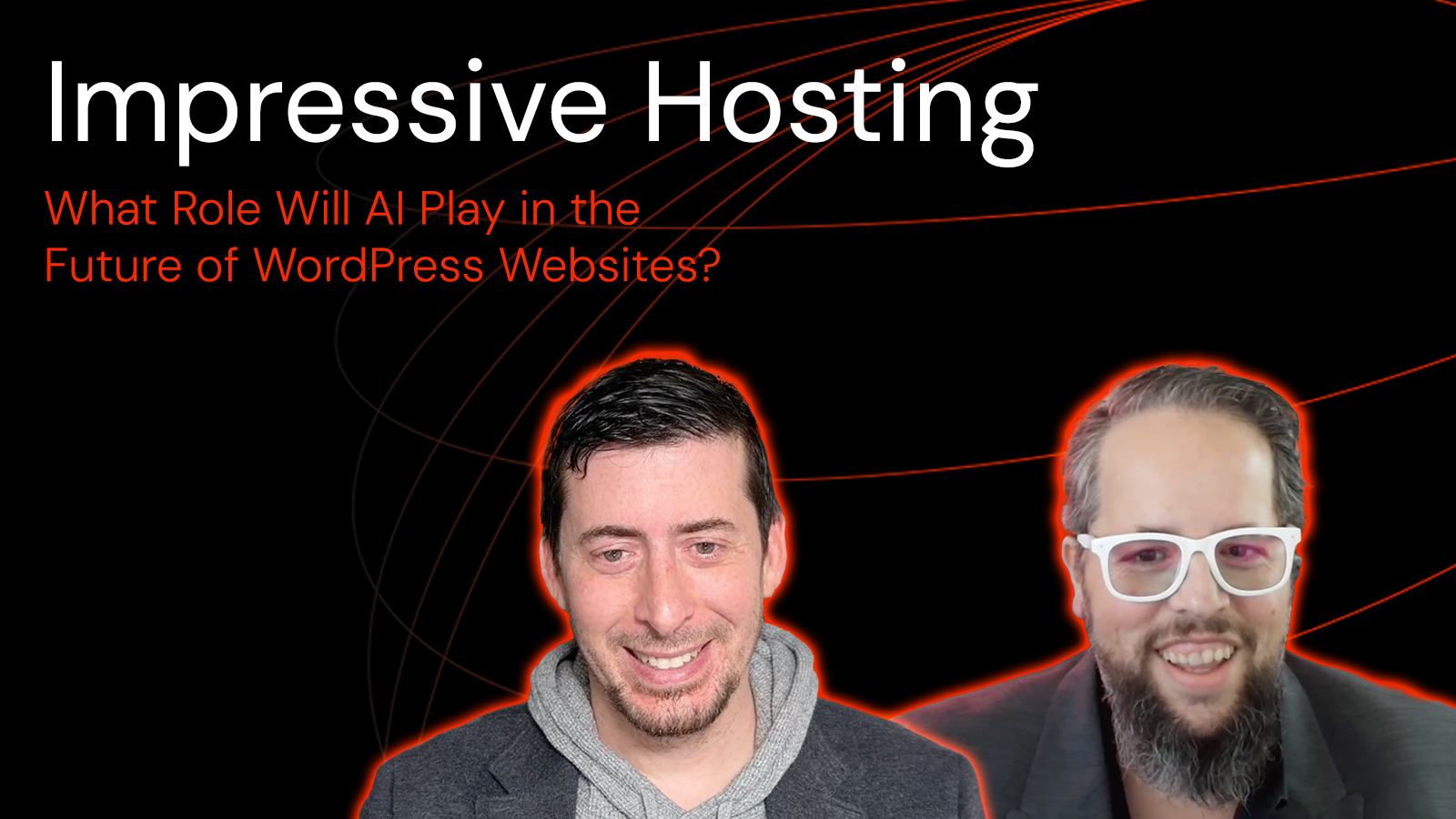
Jesse sits down with Jake Goldman from Fueled to tackle a crucial question for hosting companies: how do you prove you’re worth trusting? Jake breaks down the key factors enterprise clients look for when choosing WordPress hosting, from specialization signals to social proof.
The conversation explores how hosting companies can differentiate themselves beyond basic WordPress support. Jake emphasizes the importance of domain expertise and evidence of serving similar clients. He also discusses how WP Cloud’s connection to Automattic provides immediate credibility that hosting companies can leverage.
This episode offers valuable insights for hosting professionals looking to move upmarket and win enterprise clients. Whether you’re positioning your hosting company or choosing where to host client sites, Jake’s perspective on trust signals and specialization will help you make better decisions.
Links:
Transcript
Jake Goldman: I might be more interested in who’s building on the infrastructure to do additional things that are standout or harder to do, with open source on top of it.
Jesse Friedman: That’s funny. The person who’s responsible for it is often the deciding factor. It’s like when someone offers super cheap hosting. Your boss will say, well, how could it be good enough for us? We’re an enterprise level customer to pay 25 bucks a month or something like that.
Jake Goldman: The founder, the company that’s stuck, you know. The company of the founder and creator of WordPress, the company that owns wordpress.com. There’s very immediate quick social evidence that you can trust that the metal is optimized, created by specialists, created by experts that know that platform like no one else. That’s a huge factor, especially again, that larger side of the market, that enterprise, that business buyer who has that, you know, doesn’t want to get fired because their site goes down.
Jesse Friedman: So what we want to do is be able to come in with WP Cloud and say, hey, you guys. You’re selling domains or you’re selling a service or a plugin or whatever it might be, and you want to be able to provide hosting, we can come in, provide the underlying infrastructure with a brand that you know and trust your customers will know and trust, and then you can focus on that experience. Welcome to Impressive Hosting, a podcast about the role hosting plays in shaping the Open web. I’m your host, Jesse Friedman. On this show, we go deeper than uptime and dashboards. We talk about hosting as infrastructure, about ownership, independence, and what it takes to build ethical, high-end WordPress hosting that actually serves creators, businesses, and the internet itself. Before we dive in, head to impressive host, that’s where you can comment on episodes, ask follow-up questions, and help shape future conversations. You’ll also find links to follow, like, and subscribe wherever you listen. We are back at part two of our first interview of season two with Jake Goldman. He is the, partner.
Jake Goldman: Partner,
Jesse Friedman: advisor and partner at F. That fueled. And we were having a fantastic conversation about AI agents inside of WordPress and real-time collaboration and how that can actually reshape the way in which we are thinking about using AI inside of WordPress to help you accomplish tasks and accelerate the work that you’re doing, help you make more money, bring on more clients, all of that. Before we jump back into that conversation real quick, just a little history, Jake and I go back a long way. Jake used to live here in Rhode Island where I am currently still. And you know, we crossed paths back in, it was like 2009 through 2010, somewhere around there. And then we got involved in building up the WordPress community here. I think, you know, maybe we met at something like WordCamp Boston or something along those lines. It was something in the WordPress community. And then you had founded 10up in 2011. And at that time I had been doing some freelance work with you or whatever. And you know, I was watching from the sidelines as you know, you took this idea 10up to be one of the most, you know, prominent premier agencies in the WordPress world. And I think it’s actually amazing what you’ve gotten done. And to think back to that time when you and I had been doing, you know, smaller WordPress website projects and things like that, and now you’re doing these huge, innovative enterprise level things. It’s come a long way. Before we jump back into AI, let me ask you a question. If you were to start 10up today. How would you think differently about infrastructure and the way in which you host your client’s websites?
Jake Goldman: This is a great question. Thank you for all the kind words I should say. First, you know, let me straighten my memory. Remember what we were actually doing 15 years ago when the company first started for infrastructure. I think, even back in 2011. It was probably early days for, at least for the larger, you know, the higher end of the market and the enter, even if it wasn’t all big enterprise at that time, you know, sort of medium to larger businesses. There was still early days, what I would call more managed, focused WordPress hosting. You know, in fact a lot of our business came from partnership with WordPress VIP, which was an early stage
Jesse Friedman: Yeah, I.
Jake Goldman: infrastructure and managed hosting. So, yeah, I’m actually not sure 15 years later that basic principle of like, let companies like auto, you know, for example, Automattic and WordPress VIP, that are really good at doing this, that service. I’m trying to think today what might be different, which is, you know, I might be more interested in like who’s, you know. Who’s building on the infrastructure to do additional things that are standout or harder to do, with open source on top of it? I’ve talked a lot about AI. That’s a good example. Or even, you know, it doesn’t have to be AI, it can be collaborative tools, it can be, you know, innovation in the headless. Space and APIs, but I, you know, I’d be looking for platforms that are not just taking sort of commoditized WordPress, but are able to take that as sort of table stakes and then are doing really interesting things that are hard to do by taking full control of the infrastructure.
Jesse Friedman: Yeah. Well, that actually leads to another question, you know, from the perspective of folks at home, I, you know, I like to think that what we have as an audience members at home are folks who are working in the hosting industry because, you know, we’re spending a lot of time talking about what it takes to provide great hosting, but as a side effect, there could be a lot of people listening who are thinking about where to buy hosting. And so, you know, you mentioned a little bit about the. The fact that the host should not just be commoditizing WordPress, but has a little bit more of a responsibility to it and providing better services on top of that, from the perspective of a host who needs to make sure that they differentiate themselves, or an end customer who needs to make the decision around who to buy hosting from. How do you think a hosting company should describe the way in which they’re, like what is it that you look for when you, if you were to go, you know, move a client’s site to a new host, what would you be looking for from the outside? I’m sure you have a lot of relationships with hosting companies. I’m sure you probably have some inside track knowledge and things like that. But purely from like a website or like social, proof, what would you be looking for, to decide where to put your client?
Jake Goldman: So more abstractly if I was sort of like.
Jesse Friedman: Yeah.
Jake Goldman: Looking for. Yeah. Because I don’t think I’m the, probably not your prototypical person.
Jesse Friedman: Right.
Jake Goldman: Starting search. You know, I think I’m looking for, I’m looking for specialization, which is to say like, WordPress is not one of 20, 30 logos or platforms that they support. So, you know, evidence that they really know that particular technology and that platform will, they have some focus that I, I’m looking for, you know, I think. Anytime you’re buying at that side, you know, the, especially the high end of the market where there’s a lot of, let’s call it, CYA or a lot of, like, nobody gets fired for hiring. IBM kind of thinking. I think other social evidence people are looking for are evidence that you’ve done this for other big brands for other. Big companies I’d be looking for, have you done this before? For customers like me, that can be size and volume of traffic, that can be particularities of a sector that has risks. So like classically in healthcare, they, you know, the point of being silly sometimes for like public marketing sites, they’re looking for certain certifications and approvals. So I think the two big things anyone is reaching for are evidence that you can, you’ve served with and successfully served customers like them. And evidence that you have specialization in real strong domain, credible domain knowledge in a certain space, which I, you know, I’m sure, I mean, I know from conversations, having something like WP Cloud in their pocket provides certainly the, you know, I don’t know how much you advertise like other logos or something like that, but it certainly provides that credible specialization because it, you don’t have to dig far to find out, oh, your low level infrastructure or your baseline infrastructure is provided by the WordPress company, effectively. The founder, the company that’s stuck, you know. The company of the founder and creator of WordPress, the company that has, you know, owns wordpress.com. There’s very immediate quick social evidence that you can trust that the metal is optimized, created by specialists, created by experts that know that platform like no one else. That’s a huge factor, especially again, that larger side of the market, that enterprise, that business buyer who has that, you know, doesn’t want to get fired because their site goes down.
Jesse Friedman: Oh yeah. You know, that’s funny. The person who’s responsible for it is often the deciding factor. It’s like, you know, when someone offers super cheap hosting. Your boss will say, well, how could it be good enough for us? We’re an enterprise level customer to pay 25 bucks a month or something like that. So, it’s really great that you went down that road because we. We are a WordPress first platform, WP Cloud, right? That’s the only thing that we’re hosting is WordPress. And so it allows for us, it’s actually quarter, our ethos is to be able to take that WordPress specific knowledge, that domain knowledge as you said, and bring that to hosting companies. So.
Jesse Friedman: Oh yeah. You know, that’s funny. The person who’s responsible for it is often the deciding factor. Like, you know, when someone offers super cheap hosting, your boss will say like, well, how could it be good enough for us? We’re an enterprise level customer to pay 25 bucks a month or something like that. So it’s really great that you went down that road because we are a WordPress first platform, WP Cloud, right? That’s the only thing that we’re hosting is WordPress. And so it allows for us, it’s actually our ethos to be able to take that WordPress specific knowledge, that domain knowledge as you said, and bring that to hosting companies.
Jake Goldman: Yep.
Jesse Friedman: Yeah, that’s fantastic. That’s a great answer. Thank you. You know, so the last episode we were talking about AI, we were talking about real-time collaboration and the experience inside the WordPress ecosystem. Tell me a little bit about what you’re working on on the outside. What is going on with the front end, or inside the apps you’re working on? Is there anything really interesting in the AI space or like what is it that you’re thinking might change the way in which websites are being visited by customers in terms of AI?
Jake Goldman: Yeah, I mean there’s so many directions one could take that. I think, you know, you’re sort of poking more at like the consumer experience and expectations more than like how we build them or how we make them.
Jesse Friedman: Right. Yeah. Yeah.
Jake Goldman: I mean, I think there’s a few ways to think about that. One way to think about that is there will be experiences that were out of reach to create before, in terms of effort, cost, and technology or even ability to do certain things that are now within reach. New kinds of experiences that can be created that couldn’t be created before. More personalized experiences, more dynamic experiences. And then another way to think about it is, you know, how, which may be more of what you’re poking at. How when we think ahead, do most consumers, most people that we think of as, I sound like a nineties kid here, like surfing the internet…
Jesse Friedman: Yeah.
Jake Goldman: Do we expect them to consume content in the future? Something that’s already changed pretty dramatically from the open web. Even over, even before AI came on the scene, we’re already seeing things like, you know, take things like TikTok and social media platforms overwhelmingly consuming more of the web traffic, more of web bandwidth than the open web. But at the end of the day, if you were really searching for very specific information and knowledge, you would still go to a Google search, and it would, you know, sometimes it would take you to social media, but if you’re looking for something a bit more in depth, or more than somebody, you know, more than a one minute video or a five sentence quip on social media, you’d get sent to a website. I think that is the thing that’s most fundamentally changing. Now, I’ve heard like a kind of doomer take, which is like websites as we think of them today as like interactive medium that you browse, that’s open, owned by the owners of the content, is going away completely. And I don’t think that’s true. But I don’t think it’s entirely wrong either. I do think there’s a few different, I mean obviously, Automattic does this as well, and there are many different ways people use the web. There are many problems that the internet solves for people and websites specifically. The open web solves for people. One of those is knowledge seeking. Maybe the dominant way, being honest historically, which is, you know, huge part of WordPress’s trajectory and growth and media and publishing. It’s all an extension of knowledge seeking, right, and information seeking. There’s some question about whether like a website and a front page for like instant sort of breaking information may still be right. I can see a world where LLM generative search tools can still even grab very current information out of an API or out of like a central knowledge store or something like that. Maybe still not be the front end for presenting it. But I do think, we can go way down the rabbit hole. I do think it’s already happening and it will accelerate that websites as we think of them today on the front end, a place that you go to browse and read an article for the knowledge seeking application will continue to subside as a reality. Now, of course, content still has to be created somewhere. There will always be people that are smart and want to own their own content and own their original content store. Places like WordPress that have APIs become, as we said, you know, as we discussed in the previous episode, become a very good place to collaborate on creating content that might still be the place where people store that information, but now an AI goes and pulls it out of something with MCP or different API or REST or whatever, the interfaces in the future, and just presents it in a more personalized or chatbot or verbal dialogue or generated on-the-fly experience. However, the consumer wants to receive the information, in a personalized way. I think there’s another side. So I mean that is a bit maybe of a doomer view, which is like it’s all gonna go toward, you know, this new era of voice and bots and interactive and it’s not gonna be a front end thing anymore. It’s just gonna be a backend place where you store the data so that AI can go and fetch and retrieve it. I think maybe an interesting twist on that where I’m not as sure that that’s going to be true is more commerce centric experiences, so beyond knowledge retrieval. Tell me more about this, or I want to learn about something or what’s happening in the news today, you know, what is this growth on my foot? Like all the knowledge seeking permutations of how we use internet and the web. There is a commerce experience, which is looking to buy goods and items. Something I don’t think is going away as a human condition, for at least maybe we solve true 3D printing or replicators or something, maybe someday. But in that domain, like what I think of is like retail hasn’t gone away.
Jesse Friedman: Yeah.
Jake Goldman: The rise of Amazon, the rise of online shopping dramatically reshaped retail, obviously, right? It hired companies that don’t exist anymore because of the way that, you know, blew away certain kinds of things that there’s not really much advantage to going into a storefront. I need AAA batteries tomorrow, right? Or something like that. But, you know, maybe I’m, I don’t think I’m an oddball in this regard, but if I want to buy something that has any element of like style or taste or texture. I’m still going to a store. I’m still going to the mall. Sometimes I’m still getting in my car or walking down the street and going to a shop, right? I still want to window browse, right?
Jesse Friedman: Yeah.
Jake Goldman: And I think there’s an equivalent for that in the internet space for commerce, right?
Jesse Friedman: Yeah.
Jake Goldman: If I’m shopping for a sports jacket,
Jesse Friedman: Yeah.
Jake Goldman: Right, to our last conversation. Or suits or sweaters or shoes, whatever it is. As one example, bags for my laptop gear, right? To carry around. I’m, you know, I think that there’s something very compelling about, you have crafted this, whatever it looks like in the future, you’ve crafted this experience to consume and explore my products.
Jesse Friedman: Yep.
Jake Goldman: Whether that’s still what we think of as like a flat website or some crazy thing in VR glasses, whatever that interface looks like, that there’s a front end created by the owner of the product or the good that’s curating an experience to explore their products. And I don’t, I mean AI will play a role in that, helping generate those experiences. But I don’t think some central master AI bot that you’re always talking to is going to replace the desire to experience someone’s way of presenting their products.
Jesse Friedman: I think that’s, I think that’s right. I would definitely agree with that. I think, you know, you think about agentic commerce, right? Like in the way in which you’re talking to ChatGPT and saying something along the lines of like, oh, I don’t know, I need new shoes. I need comfortable business looking shoes, right? Like, it’ll give you a bunch of examples, right? But you know, I’m not making a tough decision within that interface. At least not yet. I’m gonna be clicking those links and going and visiting those pages. Now, if I said, give me the best, I don’t know, wireless phone charger for my Android under 25 bucks, like, that’s a quick decision I can make in a moment, right?
Jake Goldman: Yep.
Jesse Friedman: I think what happens is that anytime that we have a tough decision ahead of us, what we need from the person who’s building the product or shipping the product or whatever is a promise. And social proof is really great for that. Social media can help me get a lot of the way there, but if I’m making a decision around something like my next phone or something complicated or tough or expensive, I want to know what that company is saying specifically. And the funny thing is that while social media is so widely used for social proof and hearing what, you know, peers might be saying, it’s interesting that we don’t always trust what a corporation has to say on social media and that we still kind of pivot to their website to figure that out. And so I think you’re absolutely right. I think that the promise around a product or a decision or something like that is still gonna be, and there’s a lot of value in the domain, the actual domain, the physical domain being an authentic place where, you know, you can type it in and get, and arrive at a website and learn about that product.
Jake Goldman: Yep.
Jesse Friedman: Their art or whatever it is that they’re offering on their website. So I think you’re right. I think it’ll pivot. I think it’ll change. Of course it’ll change, but I think there’s absolutely still a place for it. And one of the things that is top of mind for me is search. I think it’s an underutilized thing within WordPress. The idea that you have all this content, you have products, you have all these things, and how are you using search today? Like Jetpack has a pretty nice elastic type search tool that allows you to filter in real time and things like that. We’ve been saying it for a long time, that websites need better search. They just do, because WordPress’s inherent core search tool is basic. It’s primitive. It gets you part of the way there when you’re running a blog, but it’s not good enough for the bigger parts.
Jake Goldman: Mm-hmm.
Jesse Friedman: And I get to a place where I’m thinking about AI and, we have live chat, but maybe that search bar evolves into conversational questions. Like instead of typing in a single keyword, I’m actually just asking it a question and then I can have a conversation with it as I’m browsing these things. And maybe it even evolves to a place where I don’t have to even click anything. Like the website itself just starts swapping content in and out as I’m having these conversations. So maybe I’m thinking about buying a new phone and I say like, does it have wireless charging? And I ask that question and as it’s asking me that the website will just, and then like, here, here’s the specs on the wireless charging and here are the accessories you can buy for it. Like, I think that would make the individual website experience superior and give you a reason to continue using that, and that’s something that WordPress can absolutely support in the future.
Jake Goldman: Yeah, I think you’re right on the mark. I mean, we focus at fuel and the tenant WordPress practice inside of it, we focus on more of the enterprise, which is oftentimes the earlier adopter case. And we also have a solution called ElasticPress that uses elastic underneath the hood to provide different kind search experiences for customers. I don’t think it’s quite there may be a little bit of overlap. I think the Jetpack solutions going after a different kind of broader market. This is more
Jesse Friedman: Right, right.
Jake Goldman: customized use cases. elasticpress.io and we’ve shipped, we shipped at the end of last year to a, almost all the energy in that product right now is around AI integration. So, for example, it now has, you can turn on a mode where if it understands the search query to be a question. Above the result, it tries to answer your search
Jesse Friedman:
Jake Goldman: results, and if you have an open ai, if you go and get an open AI key, it will also do semantic searching now, which is not just keyword matching, but that like next level semantic knowledge kind of search where it creates much better results. And then the wild frontier that feels like, maybe I’m getting out of being an engineer just in time because it feels a little overwhelming to me here. But like, there’s an awful lot of conversation, I think in agencies and digital about what the next generation of like generative AI, UX, and AI interface. I think we’ve wrote a bit about that like on our blog as well. We’ve done some experiments with like clients like Microsoft who, with like new kind of UI paradigms, but it’s tough. Like the great white whale as you described it, is the site gets to know you, whether it’s through a search query or it gets smart about what you’re looking for on the site or all the classic indicators that these CRMs are using. What search query did you come in from? What were you referred to from our website? That it gets more and more personalized to what you’re interested in and it literally generates the UI on the fly, right? What are the comp? Maybe not, it’s deciding the look of the components or something like that. But it’s deciding what elements, what blocks, what pieces to bring into the page based on your needs. One of those things that I think we talk about as, where maybe it’s not quite as ready as people like to talk about it. There are real performance, I think, challenges with that. Like I don’t, it sounds good until you think about the fact that it takes some cycles. If it’s gonna be good, it takes some real cycles and compute power and the idea that like every single page you visit on a website or even a few pages is gonna, you’re gonna hit that page, and then you’re gonna wait for an LLM to figure out what content it thinks you’re interested in, and then it’s gonna generate the page on the fly for you is just, I don’t think, maybe I’m out of touch, but I’ve yet to be convinced that the tech is really there as more than like a concept car kind of experiences. But those problems will go away. It’ll get faster, it’ll get smarter, it’ll get cheaper.
Jesse Friedman: Yeah.
Jake Goldman: So, and yeah, there’s no reason WordPress can’t provide that. In fact, some of the experimental projects we’ve done with some of our customers are on WordPress as a platform. So, yeah.
Jesse Friedman: Yeah, and I think that it actually puts an even more important emphasis on the content of your website. I mean, if you’re gonna do like a very primitive version of what we’re talking about where an AI just kind of pulls up a page and reloads the page for you on your behalf, then all of a sudden you have the need for all this curated content that’s kind of like preemptively answering these questions in a way that makes sense. Content is still gonna reign as king, I think. And having a powerful CMS behind that is gonna be always super important.
Jake Goldman: If WordPress continues to be a good, especially in the near to mid-term, a solid place to craft and create content without needing a degree in how to get, a computer science degree and how to do so. We’ve talked about that in the last, in the last episode we talked about if it continues, if it gets better quickly at being a good frontier for collaboration. Not solo editing and creating content and curating, but doing it in partnership with other human beings, with agents and everything else. It can continue to get, keep up with and keep pace with, making sure it’s accessible to AI, MCP interfaces that we’re shipping and beta the experiments plugin, that it has good interfaces for AI to interoperate with it. It’s got everything going for it to be well positioned for that like new
Jesse Friedman: Yeah.
Jake Goldman: for a lot of different reasons. Not just from classic things like scale in terms of just like the number of integrations that are gonna try to plug into it and work with it as a platform. The openness of the code base in terms of AIs and bots, so they’re really understanding what’s going on right in the how it’s functioning. The openness I think, will only become more powerful and critical because I think especially as things move faster and the gates of, I have the best software, crumbling down, being able to have an even wealthier ecosystem of people creating integrations for it. Be able to move fast and do their own, without real or limits in terms of like, frankly, even being allowed to make an extension for a platform or having the code-level access, you need to, you’ll see a proliferation of different technologies, different platforms, different AI systems, all trying to solve the same problem in the bazaar, right? That is the WordPress ecosystem and plugin space. I think it’s got, I think it still has an awful lot going for it.
Jesse Friedman: Yeah.
Jake Goldman: I’ll say again, like the, just, it’s just gotta nail those keys, which is it’s got competition. It’s got real competition on being the best place for new generations of creatives to actually go in and lay out and create sites. It’s gotta be a great collaborative frontier for working with agents and others. It’s gotta have great collaboration tools, which we’re moving fast on and prioritizing, and it’s gotta make sure that it creates this sort of foundations for AI to inter operate with it. And I’m especially bullish with what we’re focusing on at 7.0 what like James’ Paige’s team and others are doing and folks on our team contributing to like, where I’m pretty bullish actually in the last two right now. Getting good on collaboration, getting good on AI enablement. I think WordPress’s biggest challenge where it needs to like hone in on its roots still gonna be continuing to be the best place for new generations of creatives to want to go in and, with or without AI, be able to very easily create and lay out the platform. But man, if it can keep up on those three fronts, an open platform where you can choose where you put it and anything can plug into it and talk to it.
Jesse Friedman: Yeah.
Jake Goldman: I think yeah, I think you’re right. I mean, it brings you back to, what is it, the WordPress abilities API, the idea that like plugins and different agents and other things will be able to define exactly what is capable within your plugin and your technology so that you can hand over that control and do all that stuff in real time. I think that’s gonna open up a lot of doors.
Jesse Friedman: Listen, it was a long time ago, you and I were at a WordCamp. We were presenting, I forget where it was. Maybe it was Chicago, something else. And at the time it was 10up and you guys had released some new products, something that you had built because your clients needed it. And I’m gonna flake on the exact technology that it was at the time, the name of the plugin. It doesn’t matter though, because what I remember is the philosophy of 10up. The core ethos that you guys represented there was, is that you’re building this for a client need, you’re investing the time, you’re paying salaries to write code, and then you gave it away for free, right? And so we live in the WordPress space, and when I say you gave it away for free, what I mean is that you open sourced it and you made it available to other agencies to use.
Jake Goldman: Yep.
Jesse Friedman: We live in the WordPress space. I think there’s a little bit of this responsibility to open source if you’re working in WordPress. Maybe sometimes people open source things and they don’t necessarily understand the implications of it or why they’re doing it. It just feels right because you’re in WordPress. You’re someone who has been working in this space for a long time. You’ve been accelerating innovation in this area for a very long time. You’ve also worked very hard to be commercially viable and to bring good business and make money, right? So why would you give it away for free? I know the answer to this, but I want to talk about it for a second here. I think it’s something that’s really important that we don’t always think about. You can have a viable business, you can make money, you can hire people, but you can still give back. I’m just curious how did you bring that to the table? How did you convince the financiers or whoever’s behind things that you’re just going to make this available to everybody?
Jake Goldman: Well, I was very fortunate for 12 and a half years independently running 10up. I didn’t have to justify to any financier but myself. But I think if I had to convince financiers, when I tried to convince myself, we were a services business and we’re not fundamentally a product company. Eventually we released ElasticPress, which is a commercialized SaaS solution because we actually felt like we couldn’t achieve what we wanted just with open source code to make it really perform the way we wanted and create the kind of experience we wanted. We needed an infrastructure component. Those things cost money. As you pointed out at the end of the last episode, it’s okay to make money in open source. But I think at the end of the day, I knew that first and foremost we wanted to be focused on being the best professional services provider. Our success with ElasticPress notwithstanding, unless you’re very intentionally just doing services because you’re trying to pivot into product, which some companies do, I don’t think there are many companies that really do both extraordinarily well. And so being in services, not trying to make money off of this, I think there’s a very strong argument. Just looking at it from a business point of view, putting out solutions that are social proof of your skill, your capability, your thought leadership, your problem solving in space, is far more powerful than trying to make a little bit of incremental income as a services company just trying to sell code. There are other aspects to it. So for example, being able to tell a customer in a sales cycle, again from the cold calculating business point of view, we have a solution to that common problem you have. You don’t have to pay anything extra for it. Work with us. We’ve solved this problem over and over again. In fact, we’ve solved it so many times, we’ve built a solution that’s trusted and we’re constantly maintaining. That’s a very persuasive argument in a sales process to win the kind of customers and business that you want. Having those kinds of open source and smart solutions out there is also very attractive and compelling to talent you bring into the business. There is also a longer game, bigger vision side to it, which is the importance of lifting up the commons, if you will. WordPress got to where it is today because it had a low barrier of entry because it was easy for people to get in because we were not the platform where you had to be prepared to spend thousands of dollars to even get what you need to get started or get out the door. The economics of open source was a huge variable in how WordPress grew up with a certain generation that didn’t want to go spend thousands a month on Sitecore or the Adobe ecosystem or whatever it was. It had this freedom, had this sort of low barrier to entry. So I think the greater good of the ecosystem, making critical tools and features that are not available in WordPress, things like Distributor, maybe you’re thinking of, which solves sharing content to multiple websites as a solution. We’re very honored to work with, paid to do so with Google on Site Kit to be able to plug into Google measurement tools and solutions. Tools like ClassifAI that classify, an early entrant into bringing AI technologies right into WordPress. Making sure without a high barrier to entry or suddenly make it very expensive to even get started building with WordPress. I think it’s critical to the long-term lifting up of all boats in the community. There’s also an argument, I don’t know that I have a lot of evidence that this really moved the needle a whole lot, but there is particularly today a strong argument that a lot of buyers of products and services and goods from a company, all things equal, would prefer to do so with the company that is also doing something for the greater good. Maybe a little questionable how much enterprises that we work with are really swayed by that. Certainly for consumers that’s true, right? And the small to medium side of the business, it’s more true than ever. If you look at data and surveys and studies that buyers are heavily influencing their choices by what they think of as the social good or the beyond, what your identity is as a business, beyond you just manufacture the best. Whether that’s for some people that’s environmental, for some people that’s political. For some people that’s, you know, might be like animal rights or animal treatment like vegan options or something or other. So being able to say like, Hey, we give this thing away for free. If it helps you be successful with WordPress, use it. Or, I used to sometimes say, still sometimes say like, every dollar you spend with 10up, some of that goes to contributing back to the platforms that we all depend on. I don’t know, again, the enterprise space, I don’t know that I had evidence to say like, oh, it was us and another vendor and that was the thing that moved them. But it’s one more argument on the board and, you know.
Jesse Friedman: Yeah. Well, I mean the philosophy of it.
Jake Goldman: Am I making it okay to make money notwithstanding, like I’m also, you know, I do have, there is, things beyond money do matter to me too, just personally, right? So, you know, the reasons I liked WordPress, wanted to be part of WordPress, contributed to it. I don’t just measure my impact by sports jackets and wanting to leave a better, bigger impact and being part of something that millions of people use. And I find that very fulfilling in a way that, you know, net margin or something over a certain threshold. I look back on my career, I think I’m going to think more about where we contributed, helped lift up an ecosystem where millions and millions of people used the solution that we put out there. I’m not going to think about zeros or whatever margin.
Jesse Friedman: Yeah. Yeah.
Jake Goldman: Right.
Jesse Friedman: Yeah. Yeah.
Jake Goldman: Margin.
Jesse Friedman: Well, and I think, you know, the philosophy of it aside too, like the way in which a company is maybe discovering you too might be through the product that you’ve released for free. Or at the very least you’d be able to say like, Hey, this thing that we are building, that we’re giving out, we’re a leader in this industry and here’s the evidence because it’s used by other agencies. They rely on our technology. So I think that’s great. Jake, this has been such a great conversation. Before we go though, I want to try something new this season and give you a chance to ask me a question if there’s anything top of mind for you.
Jake Goldman: I mean, you know, the thing that’s been going through my head and talking to you before we started the recording and talking to you during these episodes is I think one of the topics that we sort of unpacked in this is like how people need to keep innovating with these new technologies, how these platforms need to keep ahead. It’s sort of like an almost commoditized expectation for quote unquote managed hosting for expertise in the low-lying stack. I have to imagine that one of the most interesting or maybe fulfilling things about providing like the WP Cloud service is that there’s like an opportunity cost element, which not everybody’s trying to solve the same problem over and over again of how do we make WordPress scale and cached properly and reliable and performant, which I hope lets some of these other companies and like well-known longtime reputable agencies focus on solving different problems on top of that low level stack. And I’m just curious if you have any interesting stories or any…
Jesse Friedman: Yeah,
Jake Goldman: you.
Jesse Friedman:
Jake Goldman: Like finally, we don’t have to all solve that problem together as well. And now we’ve gone off and done these three or four other interesting things on top of WordPress instead of solving the same problem.
Jesse Friedman: Well, I mean, I think you’re absolutely right. One of the core things around WP Cloud is the fact that we are WordPress first. We’re WordPress focused. We’re only hosting WordPress websites, which means that the systems teams behind it, the people building the infrastructure, are the ones doing all the work around making sure that WordPress is running effectively, that it’s thoroughly tested, that it’s ready for the big show. And you know, you and I talked about the idea of real-time collaboration coming up and it kind of worries me a little bit around the amount of increased need for more power and resources that that might need, and whether or not hosting companies are actually running those tests right now. I can tell you firsthand that WP Cloud and the team behind it, you are confident in what we are gonna be able to deliver in that area. And so does that mean that we’re actually saving companies more time, I think. Absolutely. I think it gives them the ability to rely on us to take care of that, to know that their WordPress websites are gonna be delivered in a very fast, performant and secure way. And then that gives them a little bit extra free time to think about the ways in which they want to innovate. One of the things that we say every single time that we talk to a new company around WP Cloud is that, you know, we want to be the ones focused on the infrastructure, but we live at an API level below your interface, which means that gives you so much more time and freedom to experiment, to partner with other companies, to deliver a unique user experience to go in. Solve for niche solutions. You know, if you wanna focus more efforts on selling, like pre-configured things or, you know, take on more different types of customers, maybe move up market things that you weren’t necessarily able to do before because you have limited time, limited investment. We are able to come in and help with that. And yeah. So I mean, the answer is like, yes. Yeah, absolutely. We’re doing that for those companies. But the other thing too is that there’s a lot of opportunity that we see around people who are getting into hosting. And one of the core things that we’ve talked about in the previous season is that if you are getting into hosting, if you are currently offering hosting and you’re doing any kind of marketing at all around WordPress, that is taking a customer who wants WordPress and selling them WordPress. If you’re not providing a fantastic experience to that customer, that first experience of WordPress could be their last experience with WordPress. ‘Cause they don’t necessarily think I’m gonna go get a better WordPress experience with this hosting company. They think this is WordPress. It didn’t work for me. I’m going now to Squarespace or Shopify or whatever it might be. So what we want to do is be able to come in with WP Cloud and say like, Hey, like you guys. You’re selling domains or you’re selling a service or a plugin or whatever it might be, and you wanna be able to provide hosting, we can come in, provide the underlying infrastructure with a brand that you know and trust your customers will know and trust, and then you can focus on that experience. And so that’s something that actually we’re seeing a lot of in late 2025 and early 2026. So yeah, great question. Thank you Jake. Man, this was such an awesome conversation and unfortunately we’re at time now again and I feel like we could go into a part three, but I’m gonna save you from that. Maybe what we do is have you back on in the show in a couple months and see where we landed with 7.0 and other stuff that’s going on in AI and we can pick up the conversation again then.
Jake Goldman: Would love to thank you
Jesse Friedman: Awesome. Yeah. Thank you. Thanks for joining us on another episode of Impressive Hosting, where we uncover the core tenets of great WordPress hosting. Do you have a follow-up question for today’s guest thought or comment on anything? We talked about a future guest suggestion, a hosting horror story. What do you think makes great WordPress hosting all your comments? Shape the show. Drop them on impressive dot host. We also appreciate you following us on social media and subscribing to the podcast on your favorite platform. Finally, do check out our list of open source projects that need support at impressive dot host. Whether it’s code, community, or cash, you can make a difference. See you next time.
Subscribe to Impressive Hosting:


Leave a Reply